Best Box Grater
A box grater offers several grate sizes on one sturdy tool for cheese and vegetables. Look for sharp stainless sides, a stable non-slip base and a comfortable handle.
Top picks

OXO Good Grips 4-Sided Box Grater for Cheese & Veget
All-purpose grating for cheese and vegetables
OXO's four sides cover coarse shredding, fine grating, medium shredding and slicing, so one tool handles cheddar, parmesan and vegetables like carrots or cucumber without swapping attachments. The wide non-slip base and comfortable top handle keep it stable when you lean into it.
Check price on Amazon
Martha Stewart Sprucedale 9.5-Inch Stainless Steel 4
A compact box grater for smaller kitchens
The Sprucedale's shorter frame takes up less drawer or counter space than a full-size box grater while still offering four grating surfaces. It suits cooks who want box-grater versatility without committing to a bulkier model.
Check price on Amazon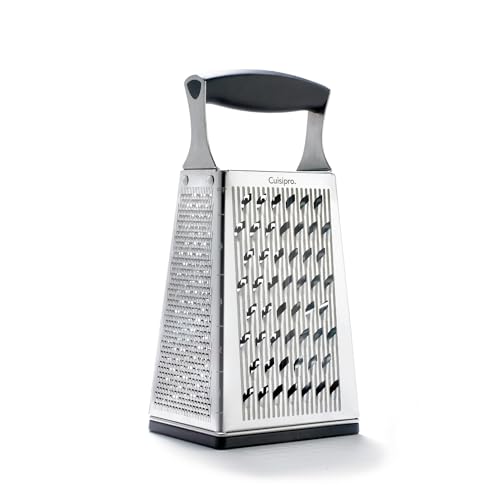
Cuisipro Stainless Steel Cheese Grater with Handle
Solid basics at a lower price
The Cuisipro keeps costs down while still offering a sturdy top handle and stable base, which matters most when pressing a block of parmesan down against the blades. It covers core grating and shredding needs without the extra size of pricier models.
Check price on AmazonWhat matters in a box grater
Sharp stainless surfaces in coarse, fine and slicing, a non-slip base for stability, and a comfortable top handle. It is versatile for cheese and vegetables, but keep knuckles clear of the blade.
Most box graters reserve one of their four faces for slicing rather than grating, a flat surface with a single angled slot meant for thin cucumber, potato or cabbage slices rather than cheese. It is easy to overlook since cheese work rarely touches it, but test it on a vegetable before you need it for a recipe, since slot angle and sharpness vary between brands. If that fourth face turns out dull or oddly angled, it is a fair sign the other grating surfaces may wear the same way over time.
Related guides
Cheese Graters Database
ComparisonRotary vs Box Grater
InformationalHow to Use a Rotary Cheese Grater
InformationalCheese Grater Types Explained
Frequently asked questions
Which side of a box grater should I use for parmesan?
The fine grating holes, usually one of the smaller punched-hole sides, turn parmesan into a light, powdery texture suited to topping pasta. Save the larger coarse holes for cheddar, mozzarella or other cheeses you want in visible shreds.
Can a box grater be used for vegetables as well as cheese?
Yes, that is one of the main reasons to choose a box grater over a rotary or handheld one. The coarse and fine sides handle carrots, zucchini and potatoes, while the slicing face works for thin cucumber or cabbage cuts.
How do I clean cheese out of a box grater's small holes?
A stiff-bristled brush works into the holes better than a sponge, and running the grater under hot water right after use stops cheese from drying and hardening in place. Hand-cleaning immediately is still the most reliable way to keep holes clear.
Is a box grater safer than a handheld grater?
The wider base and top handle generally keep fingers farther from the blades than a handheld grater does, since you press down rather than drag cheese near your hand. Even so, grating down to the last inch of a block is where most slips happen.