Best Grain Mill for Corn
For corn, choose a powerful mill built to handle hard dried corn, adjustable from coarse grits to fine cornmeal. A high-wattage commercial-style mill grinds corn best; for masa, the corn must be nixtamalized (lime-treated) first, following a tested method.
Top picks

VEVOR Electric Grain Mill Grinder, 3000W Spice
Cornmeal to grits
A commercial-style corn mill that grinds dried corn coarse to fine.
Check price on Amazon
VEVOR Electric Grain Mill Grinder, 3000W Spice
Bigger corn batches
A higher-capacity corn mill for grinding larger quantities.
Check price on Amazon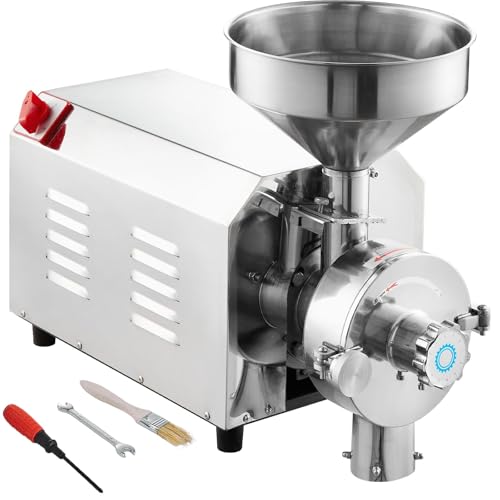
VEVOR Soybean Grinder Commercial Grinding Machine for
Serious volume
A powerful commercial grinder built for high-volume corn milling.
Check price on AmazonWhat matters for corn
Corn is one of the toughest things a home mill grinds, hard, dense dried kernels that punish weak machines. So power and a sturdy build top the list, alongside adjustable coarseness, since coarse grits and fine cornmeal are very different outputs from the same kernel.
Features to prioritise
- A high-wattage, robust motor rated for hard corn.
- Adjustable coarseness from grits to fine cornmeal.
- A durable grinding mechanism that shrugs off dense kernels.
Who this is for
Ideal for anyone making fresh cornmeal, grits or polenta, or grinding masa (with nixtamalized corn). For occasional, softer grains, a lighter mill is fine, but corn rewards power.
How we chose
We picked real, currently-listed high-power mills suited to corn, prices from live listings. Only dry, hard grains, no oily seeds; see what you can mill and impact vs stone. Full range in the best electric grain mills.
How the top picks compare
These are commercial-style mills for dried corn. The first VEVOR grinds dried corn from coarse to fine for grits and cornmeal. The higher-capacity VEVOR suits grinding larger quantities in one session. The VEVOR commercial grinder is the powerhouse for high-volume corn milling. All three target dried corn, not fresh, so plan your kernels accordingly.
Milling corn well
Dryness and grind size matter most. Use fully dried corn, since damp kernels gum up burrs and motors. Set a coarse grind for grits and polenta, a fine grind for cornmeal, and run a second pass if you want it finer. Feed steadily rather than forcing the hopper, which keeps the motor cool.
Clean the burrs after milling so corn starch does not cake, and store the ground meal airtight. Freshly milled cornmeal tastes best within a few weeks.
Related guides
Best Electric Grain Mills
Buying GuideHow to Choose an Electric Grain Mill
InformationalHow Does an Electric Grain Mill Work?
InformationalGrain Mill Problems & Fixes
Frequently asked questions
Can you grind corn in a grain mill?
Yes, with a mill rated for hard, dry corn. Adjust the grind for coarse grits or fine cornmeal. For masa, use nixtamalized corn prepared to a tested method.
What mill is best for cornmeal and grits?
A powerful mill with adjustable coarseness. Dried dent corn grinds into cornmeal or grits; heavier, commercial-style mills handle the load without straining.
Is grinding corn hard on a mill?
It can be, dried corn is hard and dense. A high-wattage, sturdy mill handles it comfortably, while lighter mills may struggle or wear faster.
Can I grind fresh corn in a grain mill?
No. Grain mills are made for dried corn. Fresh or damp kernels gum up the burrs and strain the motor, so dry the corn fully before milling.
What grind setting makes cornmeal versus grits?
A fine grind produces cornmeal, while a coarse grind gives grits or polenta. Run a second pass through a finer setting if you want an even smoother texture.