How to Choose a Fermentation Kit
Match the kit to your batches. A Mason jar kit suits small, varied ferments and beginners; a water-seal crock suits volume. Make sure it includes weights to keep food under the brine and an airlock to vent gas. Keeping food submerged matters most, and fermenting is not canning.
A fermentation kit is judged on the vessel it uses, how it lets gas escape while keeping air out, whether it includes weights to hold food under the brine, and the batch size it suits. Match those to what and how much you ferment and the choice gets simple. This guide breaks down each factor so you can buy with confidence.
Which type do you need?
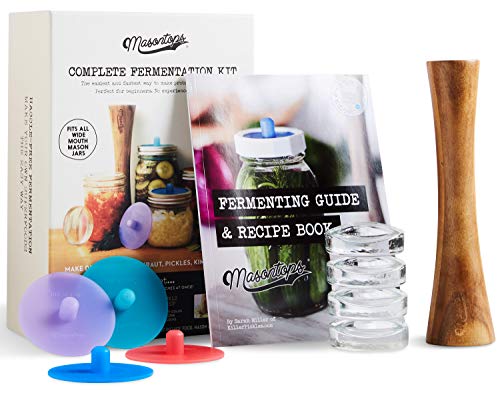
Mason Jar Kit
Best for small batches & beginners
- Airlock lids and weights for jars
- Cheap, low-commitment entry
- Ferment several flavours at once
- Small batches only

Water-Seal Crock
Best for large batches
- Traditional stoneware
- Water moat seals out air
- Heavy weight stones included
- Bulky, heavy and pricier

Complete Starter Set
Best for a guided start
- Lids, weights and a tamper
- Often includes a guide
- Everything in one box
- You may not use every piece
Find the right fermentation kit for your needs
| Your need | Best type | What to look for | Start here |
|---|---|---|---|
| Just starting out | Mason jar kit | Airlock lids, weights, wide-mouth fit | Best for Beginners |
| Small, varied batches | Mason jar kit | Multiple lids to ferment several jars | Best Kits |
| Large batches of kraut | Water-seal crock | Gallon-plus capacity, weight stones | Crock vs Jar Kit |
| All-in-one guided start | Complete set | Lids, weights, tamper and a guide | Best Kits |
| Understand the method | Any | How airlocks and brine work | How It Works |
Key features that actually matter
A silicone one-way valve or a water airlock lets CO2 out while keeping air and contaminants out.
Glass or ceramic weights hold vegetables under the brine, which is what prevents mold.
Jars suit small, varied batches; crocks handle a gallon or more of a single ferment.
Most jar kits are made for wide-mouth Mason jars; check whether jars are included.
Food-grade silicone, glass and lead-free stoneware for long contact with acidic brine.
For beginners, a recipe or method guide shortens the learning curve.
Parts that come apart and wash easily keep ferments clean batch to batch.
Jar kits store small; crocks are heavy and need dedicated space.
Mason jar kit vs water-seal crock
| Feature | Mason jar kit | Water-seal crock |
|---|---|---|
| Batch size | Small, per jar | Large, a gallon or more |
| Airlock | Silicone valve or airlock lid | Water moat around the lid |
| Variety | Several flavours at once | One large batch |
| Cost & storage | Low cost, stores small | Pricier, heavy, bulky |
| Best for | Beginners, small kitchens | Volume, traditional kraut |
A note on safety
Lacto-fermentation is generally safe because the salt brine and the acids that develop create an environment that discourages harmful bacteria, but a few basics matter. Keep vegetables fully submerged under the brine, use the right amount of salt for your recipe, and follow a tested method. A soft white film (kahm yeast) on the surface is common and usually harmless to skim, but fuzzy or coloured mold means the batch should be discarded. Fermenting is not canning: fermented foods are typically stored cold, not processed for shelf stability.
Final checklist
- How much do I want to ferment at once?
- Jar kit for small, varied batches or a crock for volume?
- Does it include weights to keep food submerged?
- What airlock does it use, and does it fit my jars?
- Are the materials food-safe for acidic brine?
- Do I want an included guide to get started?
Explore fermentation kits
Best Fermentation Kits
View best picks → ▤Fermentation Kit Database
View database → ◉Best for Beginners
View guide → ⇄Crock vs Jar Kit
Compare now →Frequently asked questions
Should I get a jar kit or a crock?
A Mason jar kit is cheap, small-batch and flexible, ideal for beginners and running several flavours at once. A water-seal crock handles a gallon or more the traditional way but is heavy, bulky and pricier. Start with jars and add a crock if you scale up to large batches.
Why are weights so important?
Weights hold vegetables under the brine, and food above the brine is where mold starts. Keeping everything submerged is the single most important factor in a clean ferment, so a kit that includes weights is essential rather than optional.
What airlock type is best?
Silicone one-way valves are simple and maintenance-free; water airlocks and crock water-moats also work well. All do the same job, letting carbon dioxide escape while keeping air and contaminants out, so choose by convenience and vessel.
Do fermentation kits include jars?
Some do; many are lids and weights for wide-mouth Mason jars you supply. Check the listing before buying if you have no jars, and choose a jars-included kit if you want to start with nothing else to source.
Is home fermenting safe?
Lacto-fermentation is generally safe because the salt brine and developing acids discourage harmful bacteria. Keep food submerged, use the right salt level, skim harmless kahm yeast, and discard any batch with fuzzy or coloured mold or a putrid smell.
Is fermenting the same as canning?
No. Fermenting preserves through acidification and the result is stored cold, not processed for shelf stability. Do not treat fermented jars as shelf-stable canned goods; they are different processes.
What can I make?
Sauerkraut, kimchi, fermented pickles and other lacto-fermented vegetables. Start with a simple recipe like sauerkraut, weigh salt and water to the ratio, and keep everything submerged while it ferments.