Best Food Dehydrator for Vegetables
For vegetables, prioritise even airflow, a low adjustable thermostat, and enough tray area for a harvest, so vegetables dry to brittle uniformly. A rear-fan (shelf-style) machine dries vegetable batches most evenly; blanch most vegetables first for the best colour and rehydration.
Top picks

Cosori Food Dehydrator, 6 Stainless Steel Trays
Even vegetable drying
A dehydrator with even airflow and adjustable low heat for vegetables.
Check price on Amazon
Cosori Food Dehydrator, 5 BPA-Free Trays, 165°F
Garden harvests
More trays for drying big batches of vegetables at once.
Check price on Amazon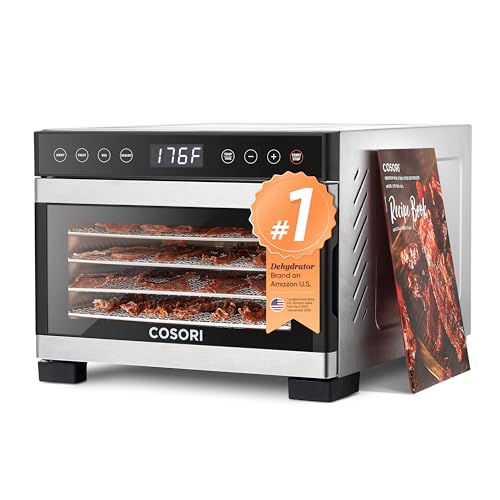
Cosori Food Dehydrator, 5 Stainless Steel Trays,
Occasional drying
An affordable option for drying vegetables now and then.
Check price on AmazonWhat matters for vegetables
Vegetables are less forgiving than fruit. They must dry to brittle all the way through, or retained moisture risks spoilage in storage. That makes even airflow and a low, adjustable thermostat the decisive features, with enough tray area to handle a harvest in one go.
Features to prioritise
- Even, rear-fan airflow. Shelf-style machines dry every tray uniformly; stackable units may need tray rotation.
- A low, precise thermostat. Vegetables sit a little cooler than fruit, around 125 to 135F.
- Useful capacity. Garden gluts arrive all at once, so tray area saves repeat sessions.
Who this is for
Ideal for gardeners preserving a harvest and cooks who want dried vegetables for soups and stews. For the odd tray, a smaller or cheaper machine works; for regular batches, even drying and capacity pay off.
How we chose
We picked real, currently-listed dehydrators with even drying and adjustable low heat, prices from live listings. Blanch most vegetables first; see how to dehydrate vegetables and how to rehydrate. For fruit, see the best dehydrator for fruit; full range in the best food dehydrators.
How the top picks compare
All three are Cosori units at different capacities. The 6-tray stainless model has even airflow and adjustable low heat for vegetables. The 5-tray version adds room for big batches. The affordable 5-tray suits occasional drying. For vegetables, even airflow and adjustable temperature matter more than the top heat.
Drying vegetables well
Prep drives the outcome. Slice evenly so pieces finish together, and blanch vegetables like carrots, beans and broccoli first, which preserves colour and helps them rehydrate later. Dry at a moderate temperature until brittle, since any softness means moisture that shortens storage. Spread pieces in a single layer for airflow.
Cool fully, then store airtight, and condition in a jar for a few days to even out moisture. Dried vegetables are great for soups, stews and backpacking meals.
Related guides
Best Food Dehydrators
Buying GuideHow to Choose a Food Dehydrator
InformationalHow Does a Food Dehydrator Work?
InformationalFood Dehydrator Problems & Fixes
Frequently asked questions
What dehydrator temperature is best for vegetables?
Usually 125 to 135F. Even airflow matters more than a high setting, because vegetables must dry to brittle throughout to store safely, and even drying gets every piece there together.
Do I need to blanch vegetables before dehydrating?
Most benefit from a quick blanch, it sets colour, slows enzymes, and improves rehydration. A few (onions, peppers, mushrooms) dry well without. See our vegetable guide for which is which.
How much capacity do I need for drying vegetables?
If you dry garden harvests, more tray area saves time, but even drying matters more than raw size, so every tray finishes at once without shuffling.
Should I blanch vegetables before dehydrating?
For many, yes. Blanching carrots, beans and broccoli preserves colour and helps them rehydrate. Slice evenly and dry until brittle for the best storage life.
How do I know dried vegetables are done?
They should be hard or brittle with no soft spots, since leftover moisture shortens storage. Cool them, then condition in a jar for a few days before long-term storage.