How to Choose a Food Mill or Ricer
Choose the tool first: a food mill for sauces and purees that need skins and seeds removed, or a ricer for the fluffiest mash. Then look at texture discs, a sturdy stainless build, capacity for your batches, and parts that come apart to clean. Many cooks keep both.
Food mills and ricers are simple hand tools judged on the texture they produce, whether they separate skins and seeds, and how sturdy and easy to clean they are. The first choice is which tool you actually need: a food mill for smooth sauces and purees, or a ricer for the fluffiest mash. This guide breaks down each factor so you can buy with confidence.
Which tool do you need?
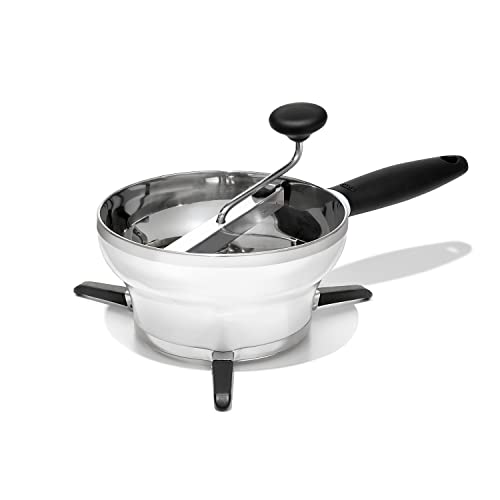
Food Mill
Best for sauces & purees
- Separates skins and seeds
- Interchangeable discs for texture
- Great for tomato sauce, applesauce
- More parts to clean

Potato Ricer
Best for fluffy mashed potatoes
- Pressed for the lightest mash
- Also great for gnocchi dough
- Simple, fast, easy to store
- Single-purpose tool

Multi-Disc Mill
Best for versatility
- Coarse, medium and fine discs
- One tool for many textures
- Sauces, purees, baby food
- Bulkier to store
Find the right tool for your needs
| Your need | Best tool | What to look for | Start here |
|---|---|---|---|
| Smooth tomato sauce | Food mill | Separates skins & seeds, fine disc | Best Mills & Ricers |
| Applesauce & purees | Food mill | Multiple discs for texture | Best Mills & Ricers |
| Fluffiest mashed potatoes | Potato ricer | Sturdy press, fine holes | Best for Mash |
| Gnocchi dough | Potato ricer | Even, dry rice for light dough | Best for Mash |
| Deciding which tool | Either | Texture and job you do most | Mill vs Ricer |
Key features that actually matter
Coarse, medium and fine discs let one food mill make everything from chunky to silky.
A mill leaves skins, seeds and cores behind, which a blender or ricer cannot do.
Stainless steel and a solid crank or press handle firm foods without flexing.
A larger hopper or ricer basket means fewer batches for big cooking or canning days.
Parts that come apart and are dishwasher-safe make cleanup after sauce far easier.
Legs or hooks that grip the pot or bowl keep a mill steady while you crank.
A ricer is hard work with a bad grip; comfortable handles matter for big batches.
Ricers store flat; multi-disc mills need a little more space for the discs.
Food mill vs ricer vs masher
| Feature | Food mill | Potato ricer | Masher |
|---|---|---|---|
| Best for | Sauces, purees, applesauce | Fluffiest mash, gnocchi | Quick rustic mash |
| Removes skins/seeds | Yes | No | No |
| Texture control | Discs, coarse to fine | Fine, even | Chunky to smooth by effort |
| Cleaning | More parts | Simple | Simplest |
Common mistakes to avoid
- Buying a ricer for sauce. A ricer will not remove tomato skins or seeds; that is a food mill's job.
- Expecting a mill to make fluffy mash. For the lightest mashed potatoes, a ricer beats a mill.
- Overworking potatoes. Whatever the tool, over-mashing turns potatoes gluey; rice or mill gently.
- Choosing flimsy metal. Thin, flexing parts struggle with firm foods; look for sturdy stainless.
- Ignoring cleanup. Sauce dries fast in small holes; pick parts that come apart to wash.
Final checklist
- Do I mostly make sauce and purees, or mashed potatoes?
- Do I need skins and seeds removed? Then a food mill.
- How many discs and textures do I want?
- Is the build sturdy stainless steel?
- What capacity suits my batch sizes?
- Do the parts come apart to clean easily?
Explore food mills ricers
Best Food Mills & Ricers
View best picks → ▤Food Mill & Ricer Database
View database → ◉Best for Mashed Potatoes
View guide → ⇄Food Mill vs Ricer
Compare now →Frequently asked questions
Should I buy a food mill or a ricer?
A food mill separates skins and seeds and makes smooth sauces and purees with interchangeable discs, ideal for tomato sauce and applesauce. A potato ricer presses potato into light strands for the fluffiest mash and gnocchi. Choose by what you make most, and consider both since each is inexpensive and does its job best.
How many discs does a food mill need?
Discs are how a mill controls texture. Coarse and fine cover most jobs, from rustic sauce to silky puree, and a third medium disc adds versatility for purees and baby food. A multi-disc mill is more flexible for varied cooking.
What makes the fluffiest mashed potatoes?
A potato ricer. Pressing cooked potato through small holes once, gently, gives fine, even strands without the overworking that releases sticky starch and turns mash gluey. Fold in warm butter and milk rather than beating for the lightest result.
What build should I look for?
Sturdy stainless steel that handles firm cooked fruit and vegetables without flexing, and comfortable handles, since both milling and ricing take force. Stainless also resists staining from acidic tomatoes and fruit and lasts far longer than thin or plastic parts.
How hard are these to clean?
Food mills have several parts, so rinse them before food dries in the disc and take them apart to wash; dishwasher-safe stainless helps. Ricers are simpler. Prompt rinsing is the key to easy cleanup after a sauce or mash session.
What capacity do I need?
For big cooking or canning days, a larger mill hopper or ricer basket means fewer batches and less work. For occasional use, a standard size is fine. Match the capacity to how much you typically process at once.
Can one tool do both jobs?
Not really. A mill makes sauces and purees and removes skins and seeds; a ricer makes the fluffiest mash. They complement each other, which is why many cooks keep both rather than compromising with one.