How to Choose Food Storage Containers: A Buying Guide
Match the seal mechanism and shape to what you're storing: clip-lock canisters for dry pantry staples, snap-lid glass containers for fridge-to-microwave meals, and size the set by weekly servings rather than by container count.
Most people buy food storage containers the way they buy socks: whatever's cheapest in a multi-pack, no real thought given. Six months later half the lids won't seal, the flour canister smells faintly of the curry it once held, and a cabinet shelf looks like a Tupperware avalanche. The fix isn't more containers. It's matching seal mechanism, shape, and material to what's actually going inside, since dry pantry staples and fridge-and-freezer meals behave very differently under daily handling and temperature swings.
Which type do you need?
Airtight Pantry Canisters
Best for dry staples that sit on a shelf for weeks
- Locks out pantry moths and weevils better than bag clips
- Wide mouths make scooping and pouring easy
- Uniform shapes stack cleanly for a tidy cabinet
- Bulky for anyone with narrow, deep shelves
- Not built to go in a freezer or microwave

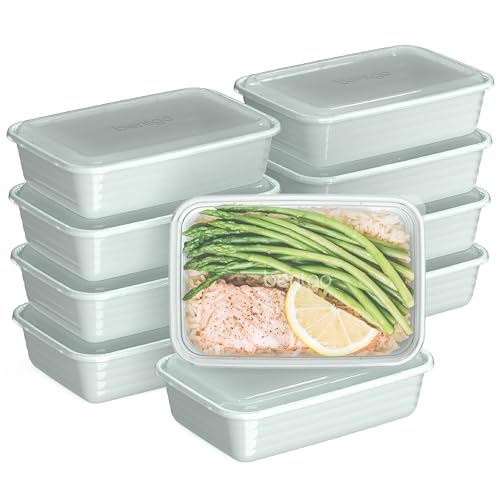
Meal-Prep & Freezer Containers
Best for food that moves fridge to microwave
- Glass bases go straight from fridge to microwave
- Snap lids survive a lunch bag getting knocked around
- Compartment options keep sauces off rice or veg
- Heavier to carry than a plastic pantry canister
- Lids aren't rated for true long-term dry storage seals
Find the right container for your needs
| If you mainly need to... | Best type | Look for |
|---|---|---|
| Organise a full pantry shelf | Airtight canister set | Vtopmart-style clip-lock lids, matching sizes |
| Batch-cook lunches for the week | Glass meal-prep containers | Skroam-style snap lids, oven and microwave safe glass |
| Keep flour and sugar fresh for baking | Wide-mouth canisters, two sizes | ComSaf 2.6Qt & 5.5Qt Flour and Sugar Containers |
| Replace a mismatched, chipped set for good | All-in-one clear pantry set | Rubbermaid Brilliance 10 Piece Set, interchangeable lids |
| Store leftovers that stain or smell | Stain-resistant plastic or glass | Tritan or borosilicate, no scratches from steel utensils |
Key features that actually matter
Clip-lock lids with four side clasps hold a tight seal fastest and survive years of daily opening. Screw-top lids seal well but slow you down and can strip over time. Snap lids sit in between.
Square and rectangular containers use cabinet space far better than round ones, and lids that nest inside each other matter more than most buyers realise on a shallow shelf.
Check the base and lid separately. Many containers rate the base microwave-safe but the lid as vented-only, so it still has to come off before reheating.
Tomato sauce, curry, and turmeric stain soft plastics within weeks. Tritan plastic and glass resist this far longer than standard polypropylene.
Count by weekly servings, not by how many containers come in a box. A family of four batch-cooking dinners needs roughly double the set a solo cook needs.
Sets where one lid size fits two or three base sizes, like Rubbermaid Brilliance, cut down on the drawer full of orphaned lids that never quite match anything.
Pantry canisters vs meal-prep containers: key differences
| Feature | Pantry canisters | Meal-prep containers |
|---|---|---|
| Typical seal | Clip-lock, four-side clasp | Snap lid or press-seal |
| Temperature range | Room temperature only | Freezer to microwave |
| Best material | BPA-free plastic | Glass with plastic lid |
| Replaced how often | Every few years | Every 12 to 18 months of heavy use |
How to test a seal before you trust it with pantry staples
Before loading a new canister with a full bag of flour, run a quick check at the sink. Snap the lid on empty, submerge the container upside down in a bowl of water for thirty seconds, then lift it out and press the sides. Steady air bubbles escaping, rather than one quick burst on entry, mean the gasket isn't seated or the lid warped in shipping. It takes under a minute per container and catches a faulty seal before it ruins a bag of rice, rather than after weevils show up three weeks later.
Common mistakes to avoid
- Buying one size for everything. Wasting shelf space on small items while bulk bags won't fit at all.
- Choosing round containers for a cabinet. When square or rectangular shapes fit two or three more per shelf.
- Assuming BPA-free means microwave-safe. When the two labels cover different testing.
- Washing clip-lock lids on the hottest dishwasher setting. Which warps the clasps faster than hand washing.
- Storing tomato-based leftovers in light-colored plastic. Without checking a stain-resistance rating first.
Final checklist
- Matched container type to what's actually being stored, dry pantry staple or fridge meal
- Confirmed the seal type: clip-lock for daily pantry use, snap lid for meal prep
- Checked microwave and freezer ratings on the lid, not just the base
- Picked square or rectangular shapes for tight cabinet or fridge shelves
- Considered stain resistance for anyone cooking with tomato, curry, or turmeric regularly
- Counted servings per week to size the set correctly for the household
- Looked for interchangeable lids to cut down on drawer clutter
- Ran the water-seal test on new containers before loading them with staples
Frequently asked questions
Is a clip-lock lid actually more airtight than a screw-top lid?
For daily use, yes in practice. A four-side clip-lock lid compresses the gasket evenly every time it's snapped shut, while a screw-top relies on a full, even turn that many people don't complete, leaving one side slightly loose. Screw-tops can seal just as well when threaded fully, but clip-lock is more forgiving of a quick, one-handed close.
Can I use pantry canisters in the freezer if I need extra space?
Only if the plastic is rated for it. Most clip-lock pantry canisters are made from a rigid plastic that can crack or warp at freezer temperatures, and the gasket wasn't designed for that kind of cold. Stick to containers labeled for freezer use, glass or freezer-rated plastic, for anything going below fridge temperature.
How many containers does a household of four actually need?
As a rough baseline, plan for one set of four to six meal-prep containers to cover a few days of lunches, plus four to six pantry canisters for flour, sugar, rice, cereal, and pasta. Households that batch-cook every weekend often end up doubling the meal-prep count so nothing sits waiting for a clean container.
Why does my clear plastic container turn cloudy after a few months?
Repeated dishwasher heat and abrasive scrubbing slowly etch the surface of standard plastics, which scatters light instead of letting it pass through clearly. Tritan-based plastics resist this far longer than basic polypropylene, and hand washing with a soft sponge slows the clouding either way.
Do I need different containers for baking staples than for general pantry items?
Not strictly, but wide-mouth canisters sized specifically for flour and sugar, like the ComSaf 2.6Qt and 5.5Qt sets, make scooping with a measuring cup easier than a taller, narrower canister built for cereal or pasta. If you bake often, it's worth having at least two wide-mouth sizes on hand.