Best Mylar Bags for Freeze-Dried Food
Freeze-dried food needs thick mylar bags and oxygen absorbers to stay crisp and shelf-stable for the long haul. Choose 5-mil-plus bags sized to a meal or batch, sealed with a matched absorber.
Top picks

Home Sensei 10pcs 5 Gallon Mylar Bags for Food Stora
Large freeze-dried loads
5-gallon mylar bags for storing big batches of freeze-dried food.
Check price on Amazon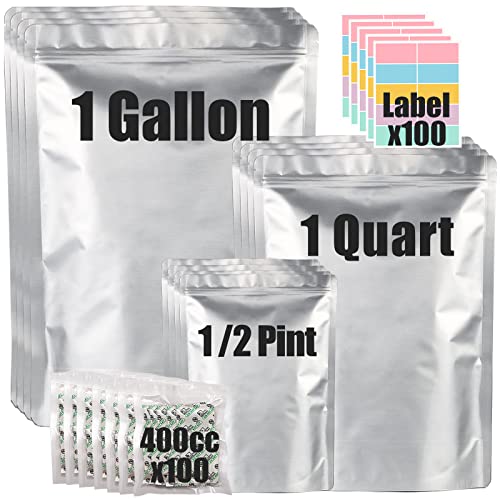
SHXWELL 100pcs Mylar Bags for Food Storage 12 Mil Th
Meal-sized portions
1-gallon bags for portioning freeze-dried meals.
Check price on Amazon
ROYLO GLOBE 120 Mylar Bags with 150 Oxygen Absorbers
Bags + absorbers
A bundle with bags and oxygen absorbers to store freeze-dried food.
Check price on AmazonWhat matters for freeze-dried food
Freeze-dried food is very low-moisture, so it stores beautifully in thick mylar with oxygen absorbers. Prioritise puncture-resistant thickness and a good seal, and keep it cool and dark for maximum shelf life.
Freeze-dried pieces are brittle and can crumble into powder if bags are tossed around or stacked under heavy buckets, so choose a mylar thickness with a bit of cushioning rather than the thinnest option, and pack bags upright instead of flat where possible. Because freeze-dried food pulls in whatever moisture is nearby, a single pinhole leak lets in enough humidity to turn crisp pieces leathery within months, even though the food is not yet spoiled. Portioning into meal-sized bags rather than one giant bag also limits how much gets exposed to air each time you open one for a meal.
Related guides
Mylar Bags & Oxygen Absorbers Database
ComparisonMylar Bags vs Vacuum Sealing
InformationalHow Many Oxygen Absorbers Do I Need?
InformationalMylar Bag Size Guide
Frequently asked questions
Does freeze-dried food need oxygen absorbers the same way regular dehydrated food does?
Yes, and often more so, since freeze-dried food's low moisture and high surface area make it more sensitive to oxidation than heavier dehydrated food. Use an absorber sized for the bag and reseal any opened pouch quickly.
Can freeze-dried food be repackaged into smaller bags after the original pouch is opened?
Yes, and it is a good idea for anything you will not finish quickly. Move it into smaller mylar bags with a fresh oxygen absorber in each, so the rest of the batch is not exposed to air every time you snack from it.
Why does freeze-dried food sometimes turn chewy instead of staying crisp?
That texture change usually means moisture has crept in through a weak seal or a pinhole, since freeze-dried food stays crisp only in a genuinely dry, low-oxygen environment, not because the food itself has spoiled outright.
Is thicker mylar always better for freeze-dried food?
Thicker mylar resists punctures from bony or sharp-edged pieces like freeze-dried chicken or berries, but for softer items like freeze-dried vegetables a mid-weight bag is usually enough, so match thickness to what you are actually packing.