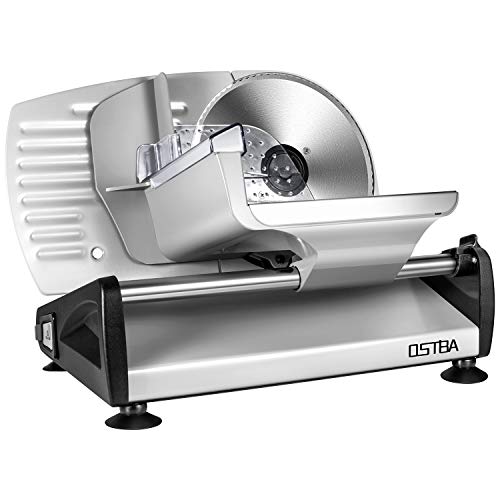
 7.5-inch slicere.g. OSTBA
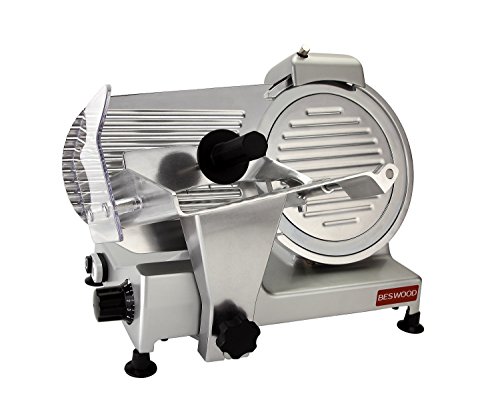 10-inch slicere.g. BESWOOD
7.5-inch vs 10-inch Meat Slicer
The verdict
A 7.5-inch blade is compact, cheaper and ideal for deli meat and small roasts. A 10-inch blade clears large roasts in one pass with a stronger motor, at a higher price and much bigger footprint.
At a glance
| Factor | 7.5-inch slicer | 10-inch slicer |
|---|---|---|
| Best for | Deli meat & cheese | Large roasts & game |
| Footprint | Compact | Large |
| Motor | Home-grade | Stronger |
| Price | Lower | Higher |
Which is better for…
Blade diameter is the spec home buyers agonise over most. A 7.5-inch and a 10-inch slicer do the same core job, but the size changes what you can slice in one pass, how much counter it eats, the motor it needs, and the price. Here is how to decide.
How they differ
The blade diameter sets the largest item you can slice cleanly in a single pass. A 7.5-inch blade comfortably handles deli meats, cheese, bacon and small-to-medium roasts, which covers the vast majority of home slicing. A 10-inch blade adds reach for large roasts, big cheese blocks and whole muscles, and usually comes on a heavier machine with a stronger motor and a bigger carriage. That extra capability costs more counter space, more weight, more noise and more money.
| 7.5-inch | 10-inch | |
|---|---|---|
| Item size per pass | Deli meat, cheese, small roasts | Large roasts, big blocks |
| Motor / build | Lighter, home-grade | Stronger, heavier |
| Counter & storage | Compact | Bulky |
| Price | Lower | Higher |
| Best for | Everyday home use | Volume & large items |
Who should choose 7.5-inch
Pick a 7.5-inch (or 8-9 inch) slicer if you mainly slice sandwich meat, cheese, bacon and the occasional roast, which is most home cooks. It stores more easily, costs less, and is lighter to lift out and clean, the practical winner for typical kitchens. If you are slicing partially frozen meat for jerky or thin cuts, this size is plenty; see how to slice frozen meat.
Who should choose 10-inch
Choose a 10-inch slicer if you regularly cut large roasts or whole muscles, slice in real volume (a big family, a home charcuterie habit, or light commercial use), or want the sturdier build and stronger motor that usually accompany the bigger blade. Just budget for the extra footprint, weight and price, and a sturdy surface to keep it on.
Things to consider either way
- Blade sharpness matters more than size for clean slices, keep it keen; see blade sharpening.
- Chill firm foods (meat, cheese) before slicing for thin, even results on either size.
- Safety and cleaning are the same job at both sizes, always unplug first; see how to clean a meat slicer.
The verdict
For most homes, a 7.5-inch slicer is the smarter buy, cheaper, compact and capable of nearly everything a home kitchen slices. Reserve the 10-inch for large items and genuine volume. Compare current models in the best meat slicers and the best slicer for deli meat.
Frequently asked questions
Is a 10-inch meat slicer better than 7.5-inch?
Not universally. A 10-inch blade cuts larger items in one pass and suits volume, but a 7.5-inch blade handles most home slicing while costing less and taking less space. Bigger is only better if you slice large items often.
What size meat slicer is best for home use?
For most homes, 7.5 to 9 inches is ideal, big enough for deli meat, cheese and small roasts, compact enough to store. Step up to 10 inches only for large roasts or high volume.
Does a bigger slicer blade slice faster?
It slices larger items in a single pass and often pairs with a stronger motor, so yes for big items and volume. For normal home portions, both sizes are similar in speed.