 Stovetop cannere.g. Presto 23-qt
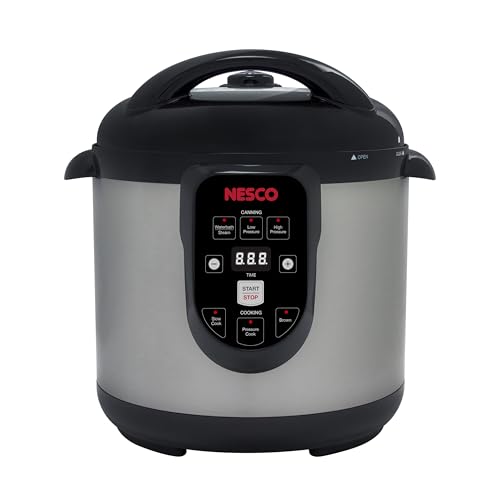 Electric cannere.g. NESCO NPC-9
Electric vs Stovetop Pressure Canner
The verdict
A stovetop canner holds large batches, works with the full range of USDA-tested recipes and gives precise pressure control, but ties up a burner. An electric canner frees the stove and runs hands-off, but can only be trusted with the manufacturer's tested canning programs. Both are safe only when used with tested processes.
At a glance
| Factor | Stovetop canner | Electric canner |
|---|---|---|
| Capacity | Large (up to 23 qt) | Smaller, fixed |
| Recipe range | Full USDA-tested range | Maker-tested programs only |
| Convenience | Ties up a burner | Hands-off, frees the stove |
| Control | Precise (dial/weighted) | Programmed |
Which is better for…
The choice between an electric and a stovetop pressure canner is really a choice between convenience and flexibility. Both can process low-acid foods safely, but only when used exactly as tested for that model.
Where each one wins
A stovetop canner is the flexible, proven workhorse: it holds large batches, works with the full range of USDA-tested recipes, and lets you control pressure precisely with a dial or weighted gauge. Its cost is that it ties up a burner and needs a cooktop that suits its size and weight. An electric canner runs on its own element and frees the stove, with programmable, hands-off operation that many find easier, but it can only be trusted with the canning programs and recipes the manufacturer has specifically tested.
The safety line that matters
The critical rule is the same for both: use only tested processes. With a stovetop canner that means USDA or National Center for Home Food Preservation recipes for your food, jar size and altitude. With an electric canner it means the maker's own validated canning programs. Do not assume an electric appliance can process a stovetop recipe unchanged, and never use a general pressure cooker or multicooker for canning low-acid foods.
Quick guidance
- Choose stovetop if you want large batches, precise pressure control and the widest range of tested recipes.
- Choose electric if you value hands-off convenience and a free stovetop, and will stay within the maker's tested programs.
- Either way, follow tested processes exactly and keep gauges and seals in good order.
See models of both types in our best pressure canners guide.
- National Center for Home Food Preservation (NCHFP) — tested home-preservation methods and the USDA Complete Guide to Home Canning
- USDA Food Safety and Inspection Service (FSIS)
- U.S. Food & Drug Administration (FDA) — Food
- FoodSafety.gov
Frequently asked questions
Are electric pressure canners safe for low-acid foods?
Only when used exactly as the manufacturer tested them. An electric canner must have validated canning programs for the food you are processing; do not run a stovetop recipe on it unchanged, and never use a general multicooker for canning low-acid foods.