How to Choose a Sous Vide Machine
Choose a sous vide machine by matching the clamp to your cookware, checking its circulation strength against your typical batch size, and confirming it has a low-water sensor. From there, weigh noise level and real app value, since app-connected models like the Anova 3.0 suit remote monitoring while manual circulators like the Wancle offer full power at a lower price.
Every immersion circulator does the same core job: clip onto a pot, heat the water, and hold a set temperature for hours. The differences that actually matter in daily use rarely show up on a spec sheet. How far the clamp reaches into your cookware, how forcefully the unit moves water past your food, whether it warns you before the water runs low, how much noise it makes during a long cook, and whether the companion app is worth the extra cost. This guide walks through each of those factors so you can pick a machine that fits how you actually cook, not just the one with the flashiest listing.
Which type do you need?
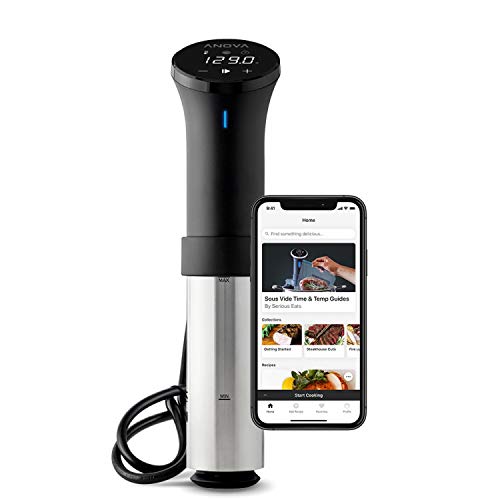
App-Connected Circulators
Pair with a phone app for remote monitoring and presets
- Check or adjust a cook from another room
- Guided presets take the guesswork out of common cuts
- Low-water and temperature alerts reach your phone directly
- Needs a stable Wi-Fi connection and occasional updates
- Costs more for features some cooks rarely open

Manual Immersion Circulators
Dial or button-operated, skips the app entirely
- Set a temperature and start cooking immediately
- Fewer electronic layers means fewer things to troubleshoot
- Usually the most affordable way into full-power sous vide
- No way to check on a cook once you leave
- Small displays make fine adjustments a bit fiddly
Find the right circulator for your needs
| If you... | Look for |
|---|---|
| Cook for one or two people | A compact clamp and modest flow rate, like the Anova Nano 2.0 |
| Batch-cook proteins in a large stockpot | Stronger flow rate and a clamp that reaches a tall rim |
| Start cooks while you're away from home | An app-connected model with low-water alerts, like the Anova 3.0 |
| Want to try sous vide before spending more | A full-power manual circulator such as the Wancle |
Key features that actually matter
Measure your pot's rim depth and wall thickness before buying. A clamp that barely reaches a thick-walled pot or an odd-shaped container can tilt out of the water during a long cook.
A stronger pump matters more in large containers or with several bags packed in at once. For a small pot serving two, extra flow rate changes little.
Long cooks lose water to evaporation. A sensor that alerts or shuts off before the level drops too low protects the motor and keeps the bath at temperature.
Heat-up can hum loudly, but check reviews for cruising noise once the bath reaches temperature, since that's the sound you'll live with for hours.
Any circulator can hold a number for a set time. Better apps add doneness guides by thickness, repeatable cook history, and alerts that actually reach your phone.
Stainless steel heating elements resist mineral buildup better than plastic-shrouded designs. If you cook weekly, this outlasts nearly every other spec on the list.
App-Connected vs Manual: key differences
| Feature | App-Connected | Manual |
|---|---|---|
| Setup | Pair to Wi-Fi and create an account first | Clip on, set the dial, and start right away |
| Monitoring | Check and adjust the cook remotely | Must be home to check or change anything |
| Typical price | Higher, reflecting the app and hardware | Lower, with savings going toward raw power |
| Best for | Busy schedules and guided presets | First-time buyers who prefer physical controls |
Positioning the circulator for even results
Where you clip the circulator changes how evenly the water heats. Face the outlet toward the center of the pot rather than straight at the wall, so the current moves through the food instead of along one side. Leave an inch of open water between the intake and the nearest bag, since a blocked intake cuts flow rate even on a strong unit. If you're cooking several bags at once, stand them on edge in a rack instead of stacking them flat, so water passes between each one. In containers deeper than about 8 inches, check the temperature near the bottom with a separate thermometer the first time, since a weak flow rate can leave the bottom a degree or two behind what the display shows.
Common mistakes to avoid
- Choosing a machine by wattage alone. Without checking clamp fit.
- Running a cook near the minimum water line. Where evaporation can trip a shutoff.
- Packing too many bags in one container. So circulation slows unevenly.
- Assuming every app offers the same presets. As the first one you tried.
- Ignoring cruising noise. And being surprised by a hum during a long cook.
Final checklist
- Measure your pot's rim depth against the clamp's reach
- Confirm the flow rate suits your usual batch size
- Check whether the unit alerts at a low water level
- Read reviews for cruising noise, not just startup noise
- Decide honestly whether you'll use app presets or want a simple dial
- Compare cord length against your kitchen's outlet placement
- Look at housing material if you'll cook sous vide often
- Set a budget around features you'll actually use
Frequently asked questions
What clamp size do I need for a deep stockpot?
Check the manufacturer's stated clamp reach against your pot's rim thickness and depth before buying, since a clamp that barely grips a thick-walled or extra-deep pot can tilt out of the water during a long cook.
Does a stronger flow rate actually change how food cooks?
It matters most in large containers or with multiple bags packed in together, where stronger circulation keeps the whole bath at an even temperature. In a small pot for one or two servings, the difference is barely noticeable.
What happens if the water level drops too low mid-cook?
Most circulators either shut off or send an alert once the water falls below the intake, which protects the motor but also stops your cook. A model with a clear low-water sensor is worth prioritizing for anything longer than a couple of hours.
Is a louder circulator a sign something is wrong?
Not necessarily. Many units hum more during the initial heat-up and settle down once they reach temperature, so it's worth checking reviews for cruising noise rather than judging noise level from the first few minutes.
Are app features worth paying extra for?
That depends on whether you'll actually use remote monitoring, guided presets, or cook history. If you're usually home during cooks and prefer physical controls, a manual circulator delivers the same cooking results for less money.