How to Choose a Vegetable Chopper
Choose a manual press or pull-cord chopper for everyday dicing on a budget, or an electric one-touch model if you regularly chop tougher vegetables in bigger batches. Beyond that, match catch-container capacity to how much you prep at once and check how many parts are dishwasher-safe before buying.
Picking a vegetable chopper comes down to a handful of practical questions that spec sheets rarely answer on their own. How much force can you comfortably put behind a press lever, and how many cups of diced onion or pepper do you need before switching containers? This guide walks through the buying framework that matters most: dice size options, catch-container capacity, how much effort a press design demands compared with a pull-cord, how many parts end up in the dishwasher, and what actually keeps onion tears off your face at the counter.
Which type do you need?
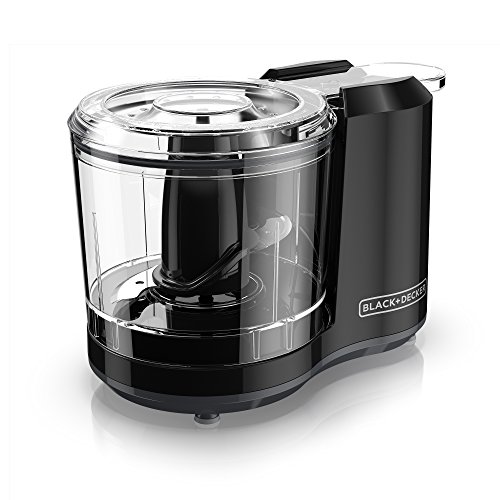
Manual Choppers
Press-lever and pull-cord models with no cord to plug in
- Usually costs under $30
- Fully submersible and easy to rinse in a sink
- Lets you control dice size press by press
- Dense vegetables like carrots take real forearm strength
- Slower to get through a large batch than a motor
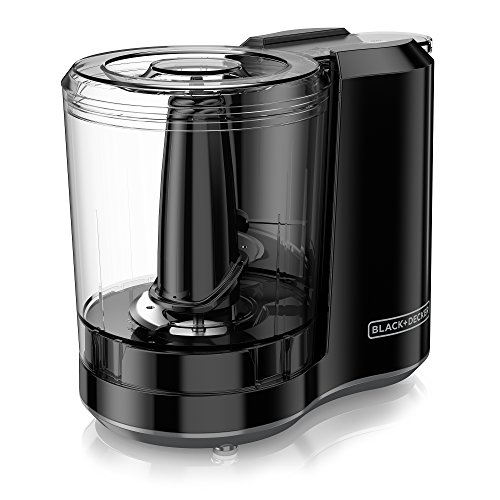
Electric Choppers
One-touch motorized models for bigger, tougher loads
- Chops sweet potatoes and other dense produce with no strain
- Clears a full onion in a few short pulses
- Bigger bowls suit batch cooking and larger families
- Needs counter space near an outlet
- More seals and parts that can wear out over time
Find the right chopper for your needs
| Your situation | Best pick | Why it fits |
|---|---|---|
| Daily dicing for one or two people | Fullstar Pro Original Vegetable Chopper & Spiralizer | A compact container and several blade inserts cover most weeknight jobs |
| You want speed with no cord to deal with | Kuhn Rikon Pull Chop Chopper | A pull-cord mechanism chops in seconds with almost no setup |
| You cook bigger batches or tougher produce | BLACK+DECKER 3-Cup One-Touch Food Chopper | A stronger motor and 3-cup bowl handle denser loads without a fight |
| Onions are your main frustration in the kitchen | Vidalia Chop Wizard Vegetable Chopper | A fixed grid produces an even dice without knife work over the cutting board |
Key features that actually matter
Some choppers include only one grid, while others ship with two or three so you can switch between a fine dice and a coarser chop for the same vegetable.
A 2-cup container fills quickly once you start on a soup base, while a 4-cup model lets you work through an onion and a pepper before you need to empty it.
Dense produce like carrots and sweet potatoes takes genuine downward force on a lever design, which matters if wrist or grip strength is a concern.
A pull-cord swaps that force for a quick tug, trading a bit of dice consistency for speed and far less strain on your hands.
Count the pieces before buying. A chopper with two dishwasher-safe parts fits into a daily routine far more easily than one with five.
A snug-fitting lid traps onion vapor inside the container rather than letting it drift up toward your eyes while you work.
Press choppers vs pull-cord choppers: key differences
| Feature | Press choppers | Pull-cord choppers |
|---|---|---|
| Effort needed | A firm downward push, more on dense vegetables | A short tug on a cord, generally less strain |
| Dice control | Consistent, grid-based dice on every push | Dice size shifts depending on how hard and how often you pull |
| Speed on a full load | One press per batch, slower overall | Faster since repeated pulls work through the load in place |
| Best suited for | Precise dice for salsa, salads, and stir-fry | Quick rough chops for soups, sauces, and stocks |
How to keep vegetables from turning into mush
The most common complaint about vegetable choppers isn't the price or the noise, it's watery, mushed produce instead of clean cubes. Most of that comes down to overloading the container and pressing once instead of working in stages. Fill the chopper only about two-thirds full, then use two or three shorter presses or pulls rather than one long push. Watery vegetables like tomatoes and cucumbers hold up better if you pat them dry first and use a coarser grid, since a fine dice grid tends to crush soft flesh instead of slicing through it cleanly. If you're prepping something delicate for a salad, chilling it in the fridge for ten minutes beforehand firms it up enough to chop cleanly instead of pulping.
Common mistakes to avoid
- Overfilling the container. So the blade only reaches the top layer while the bottom sits uncut.
- Choosing a model by price alone. Without checking how many parts require hand-washing.
- Running a fine dice grid on watery produce. Like tomatoes, which turns it to pulp instead of cubes.
- Skipping a trial run during the return window. Before committing to daily use.
- Ignoring catch-container capacity. Then having to stop and empty it every few pieces during meal prep.
Final checklist
- Decide between manual and electric based on how often you cook in bulk
- Check how many blade grids are included and what dice sizes they produce
- Match the catch-container size to how much you actually prep in one sitting
- Count the dishwasher-safe parts before assuming cleanup will be quick
- Check the lid seal closely if tearless onion chopping is a priority for you
- Look for rubber feet or a suction base if you'll be pressing down hard
- Compare the full lineup on our best vegetable choppers page before you decide
Frequently asked questions
Do I need more than one blade grid?
One grid handles most everyday dicing, but a second coarser or finer grid earns its keep if you regularly switch between salsa-style dice and rough chopped onions for soup.
How much force does a press chopper actually require?
Enough that dense vegetables like carrots or sweet potatoes take a firm two-handed push. Softer produce like mushrooms or ripe tomatoes needs barely any pressure at all.
Are pull-cord choppers less precise than press models?
Slightly. A pull-cord gives you speed and less strain, but dice size varies more with how many times you pull compared with the fixed result of a press-and-grid design.
How many dishwasher-safe parts should I look for?
Two to three is a realistic target. Anything beyond four or five parts tends to turn daily cleanup into a chore that gets skipped.
Will a chopper stop onions from making me tear up?
Mostly, yes, because the cutting happens inside a sealed container instead of on an open board. A tight-fitting lid matters more here than the blade itself.