Best Dehydrator for Fruit Leather
For fruit leather, choose a dehydrator with even airflow and solid (fruit-roll) sheets, so poured purees dry uniformly without cracking. Even drying matters more than power for leather; a rear-fan or well-designed stackable with solid sheets gives smooth, pliable results.
Top picks

Cosori Food Dehydrator, 6 Stainless Steel Trays
Even leather drying
A dehydrator with even airflow that dries poured fruit leather uniformly.
Check price on Amazon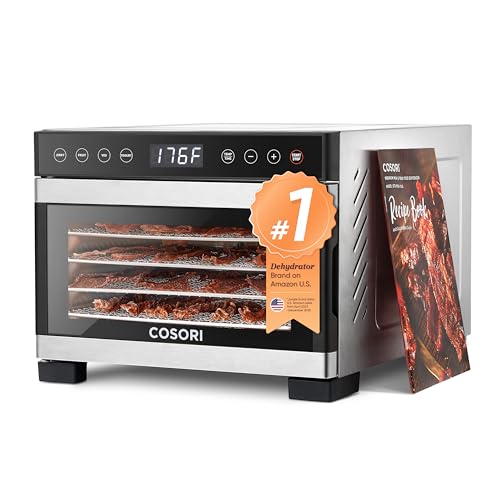
Cosori Food Dehydrator, 5 Stainless Steel Trays,
Multiple leather trays
More tray area for drying several sheets of leather at once.
Check price on Amazon
Cosori Food Dehydrator, 5 BPA-Free Trays, 165°F
Trying leather
An affordable dehydrator to start making fruit leather at home.
Check price on AmazonWhat matters for fruit leather
Fruit leather is a poured puree, not a sliced solid, so it needs two specific things: solid sheets to hold the wet puree, and even, gentle airflow so it dries uniformly. Get the airflow wrong and you end up with crisp edges and a sticky centre. Capacity is secondary here; evenness is everything.
Features to prioritise
- Solid fruit-roll sheets that hold puree without dripping.
- Even airflow (rear-fan or well-designed) for uniform drying.
- A low, steady thermostat to set the leather without scorching.
Who this is for
Ideal for parents making wholesome snacks and anyone with a fruit glut to turn into rolls. If you dry mostly sliced fruit, any even-drying machine with solid sheets works.
How we chose
We picked real, currently-listed dehydrators with even drying and solid sheets, prices from live listings. Learn the method in how to make fruit leather and see the right solid sheets. See also the best dehydrator for fruit and the full range in the best food dehydrators.
How the top picks compare
All three are Cosori units at different capacities. The 6-tray stainless model dries poured leather uniformly thanks to even airflow. The 5-tray stainless version adds room for several sheets at once. The 5-tray budget model is the affordable way to start making leather at home. For leather, even airflow and a flat surface matter more than the top temperature.
Making fruit leather that peels cleanly
The pour and the surface decide success. Blend fruit smooth, then spread it thin and even on a solid sheet or liner, thicker at the edges since they dry fastest. Dry at a moderate temperature until the leather is tacky but no longer wet in the middle. It should peel in one piece.
Cool it fully, then roll it in parchment and store airtight. Rotate trays partway if one corner of your machine runs hotter.
Related guides
Best Food Dehydrators
Buying GuideHow to Choose a Food Dehydrator
InformationalHow Does a Food Dehydrator Work?
InformationalFood Dehydrator Problems & Fixes
Frequently asked questions
What dehydrator is best for fruit leather?
One that takes solid fruit-roll sheets and dries evenly, so the puree sets uniformly rather than crisp at the edges and tacky in the middle. Even airflow is the key feature.
Can any dehydrator make fruit leather?
Most can with the right solid sheets, but even-drying machines give more consistent results. Uneven dryers leave the centre tacky while the edges over-dry.
What sheets do I need for fruit leather?
Solid, non-stick fruit-roll sheets, not mesh, so the poured puree cannot drip through. Silicone or the maker's solid inserts work well.
What do I need to make fruit leather in a dehydrator?
A solid tray sheet or liner and even airflow. Spread blended fruit thin and even, then dry at a moderate temperature until it is tacky and peels off in one piece.
How do I know fruit leather is done?
It should be tacky to the touch but no longer wet in the middle, and it should peel away cleanly in a single sheet. Cool it, then roll and store it airtight.