How to Choose a Kitchen Scale
Match the scale to what you weigh. An 11-pound, 1-gram scale with a reliable tare covers most cooking and baking; 22 to 33-pound scales suit bulk; a finer 0.1-gram scale suits coffee and spices. A readable display and easy-clean platform matter day to day.
A kitchen scale is judged on the range it weighs accurately, how finely it reads, the units and tare function it offers, and how easy it is to clean and store. Match those to whether you cook, bake or portion in bulk and the choice gets simple. This guide breaks down each factor so you can buy with confidence.
Which type do you need?

Everyday Digital
Best for cooking & baking
- Around 11 lb capacity
- 1-gram precision
- Tare and unit switching
- Not for very small amounts

High-Capacity
Best for bulk & meal prep
- 22 lb to 33 lb capacity
- Weighs large roasts and batches
- Still reads in grams
- Coarser at very low weights
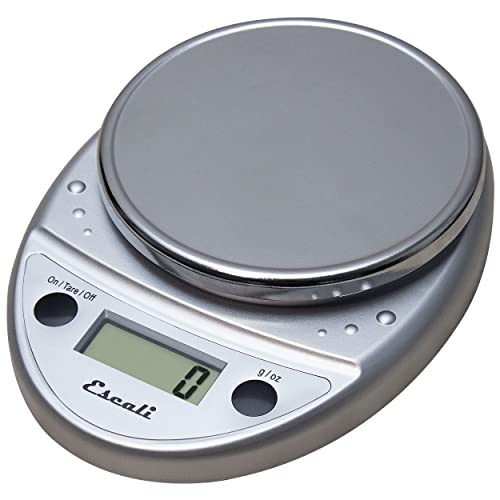
Compact & Durable
Best for small kitchens
- Slim, easy to store
- Simple, reliable readout
- Often a long warranty
- Lower maximum capacity
Find the right kitchen scale for your needs
| Your need | Best type | What to look for | Start here |
|---|---|---|---|
| Baking by weight | Everyday digital | 1-gram precision, reliable tare | Best for Baking |
| Everyday cooking | Everyday digital | Unit switching, easy-clean platform | Best Kitchen Scales |
| Large roasts & bulk | High-capacity | 22 lb+ capacity, sturdy platform | Capacity Compared |
| Meal-prep portioning | High-capacity | Fast tare, clear display | Best Kitchen Scales |
| Small kitchen | Compact | Slim body, easy to store | Best Kitchen Scales |
Key features that actually matter
Match the maximum to what you weigh; 11 lb covers most cooking, 22 to 33 lb suits bulk.
1-gram increments suit most cooking and baking; smaller amounts need a finer scale.
Zeroing out the bowl lets you add ingredients one after another in the same container.
Switching between grams, ounces, pounds and millilitres covers most recipes.
A clear, backlit display that is not hidden by a large bowl is easier to read.
A smooth, sealed platform or a removable bowl wipes down without trapping food.
Battery type and how quickly it auto-offs affect convenience mid-recipe.
A solid platform and a stated warranty signal a scale that lasts.
How much precision do you really need?
| Use | Capacity | Precision |
|---|---|---|
| Everyday cooking | 11 lb is plenty | 1 gram is fine |
| Baking by weight | 11 lb | 1 gram, with reliable tare |
| Bulk / meal prep / roasts | 22 to 33 lb | 1 gram |
| Very small amounts (spices, coffee) | Low | A finer 0.1-gram scale is better |
For almost all cooking and baking, a 1-gram scale with enough capacity and a good tare is all you need. Only very small quantities, such as coffee doses or spice blends, benefit from a finer 0.1-gram precision scale.
Common mistakes to avoid
- Buying too little capacity. A scale that maxes out mid-recipe is frustrating; match it to your biggest job.
- Expecting 1-gram scales to be precise at tiny weights. For coffee or spices, use a finer scale.
- Ignoring the display position. A big bowl can hide the readout; look for a pull-out or offset display.
- Forgetting the tare. Zeroing the container is the whole point; make sure tare is quick and reliable.
- Overloading. Weighing past the maximum can damage the sensor; respect the rated capacity.
Final checklist
- What is the heaviest thing I will weigh?
- Is 1-gram precision enough, or do I need finer?
- Does it tare quickly and switch units I use?
- Can I read the display with a bowl on top?
- Is the platform easy to clean?
- What warranty is documented?
Explore kitchen scales
Best Kitchen Scales
View best picks → ▤Kitchen Scale Database
View database → ◉Best for Baking
View guide → ⇄Capacity Compared
Compare now →Frequently asked questions
What capacity kitchen scale should I buy?
An 11-pound scale covers almost all home cooking and baking. Choose a 22 to 33-pound high-capacity scale only if you weigh large roasts, whole birds, big meal-prep batches or bulk ingredients that would exceed a standard scale.
How precise does a kitchen scale need to be?
For cooking and baking, 1-gram precision is enough. Only very small quantities, like coffee doses or spice blends, benefit from a finer 0.1-gram scale, so most people are well served by a good 1-gram model.
Why does the tare function matter?
Taring zeros the display with your bowl on the platform, so you weigh only the food you add. Taring between ingredients lets you build a whole recipe in one bowl, accurately and with less washing up, which is the main reason weighing beats measuring cups.
What units should it support?
Grams and ounces are essential; pounds and millilitres are useful. Grams give the finest, most consistent results for baking, while ounces suit many everyday recipes. A scale that switches between them covers most cookbooks without conversions.
Does display position matter?
Yes. A large mixing bowl can hide the readout on a flat scale. A pull-out or offset display keeps the numbers visible while you weigh into a big bowl, which is genuinely useful for baking.
Are pricier scales more accurate?
Not necessarily for home use. Most 1-gram scales are accurate enough for cooking and baking; price usually reflects build, display features and warranty rather than precision. Match features to your needs rather than paying for accuracy you will not use.
What about weighing coffee or spices?
For small doses, a 1-gram scale is too coarse to be useful. A finer 0.1-gram scale gives the resolution you need for coffee and spice blends, while a standard kitchen scale handles everything larger.