Best Vacuum Food Storage Containers
Vacuum food storage containers keep leftovers, prepped meals and dry goods fresher by pumping the air out of a reusable box. The main decisions are material and setup: glass resists stains and usually reheats, plastic is lighter and better value in big sets, and vacuum systems pair a matched pump with an expandable range. Pump type, set sizes, seal strength and which uses are rated round out the choice. This guide compares real, currently listed containers and recommends options for a complete system, reheating and value meal prep. Above all, this is storage, not canning. Our assessment is based on verified listing details rather than a claim that every set was bench-tested.
We evaluate vacuum containers using verified listing details, manufacturer information, material, pump and set data, and stated uses. Where reliable hands-on evidence exists we incorporate it separately and label it clearly. We never publish fake ratings or unverified specifications, and we are clear that vacuum containers are storage, not canning.
For a quality, expandable setup the Zwilling Fresh & Save system is a strong pick; for reheating, Chef Preserve glass containers resist stains; for value meal prep, a big plastic set like LemonRoad stacks and seals well. All are for storage, not canning.
Top picks
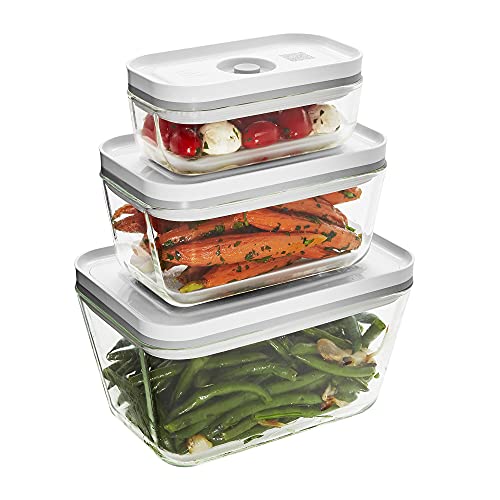
Zwilling Fresh & Save Vacuum System
A complete, expandable setup
A matched pump and an expandable range of containers for a coherent, quality vacuum-storage system that you can grow over time.
Check price on Amazon Read review
Chef Preserve Glass Vacuum Containers
Reheating leftovers
Glass vacuum containers that resist stains and odours and reheat in the microwave, ideal for leftovers you warm up.
Check price on Amazon Read review
LemonRoad 9-Set Vacuum Storage Containers
Bulk meal prep
A nine-piece multi-size plastic set that stacks neatly and seals for the fridge, a good-value meal-prep starter.
Check price on Amazon Read reviewHow they compare
| Product | Best For | Material | Pump | Set size | |
|---|---|---|---|---|---|
| Zwilling Fresh & Save | System | Plastic | Manual / electric | 3-pc | View on Amazon |
| Chef Preserve Glass | Reheating | Glass | Manual | — | View on Amazon |
| LemonRoad 9-Set | Value | Plastic | Manual | 9-pc | View on Amazon |
| SNUGTOPIA 8-Pc | Meal prep | Plastic | Manual | 8-pc | View on Amazon |
| URPOWER Glass | Glass | Glass | Manual | — | View on Amazon |
Model identity, specifications and links verified from live listings and manufacturer sources. A dash (—) means the figure is not stated; confirm the current price on Amazon.
In-depth reviews
Zwilling Fresh & Save Vacuum System
Best for: A complete, expandable setup
A coherent vacuum system rather than a single set. A matched pump and an expandable range make it the pick for people who want a quality, long-term setup.
Check price on AmazonWhy it made our list
Its strength is the ecosystem. The pump and containers are designed to work together reliably, the range spans sizes and, in some kits, bags, and you can keep adding pieces over time. For someone building a proper vacuum-storage habit rather than buying one box, investing in a well-made system pays off in consistency and looks.
Key specifications
- Matched pump and containers
- Expandable, coherent range
- Premium build and look
- Grows with your needs
- Tied to one brand's parts
- Costs more than generic sets
- Check which pieces reheat
- Storage, not canning
How it compares
Against Chef Preserve glass, the Zwilling is a whole system rather than glass boxes, so it is about coherence and expandability more than reheating. Against a value plastic set like LemonRoad, it costs more but feels premium and grows over time. Choose Zwilling for a long-term system, glass for reheating, or a plastic set for value.
What to watch for before buying
For a system, the things to weigh are cost and brand lock-in rather than performance. Its matched pump and expandable range are the reasons to choose it over a one-off set.
You want a quality, expandable vacuum-storage system and will keep adding matched pieces.
You want the cheapest way to seal leftovers; a generic plastic set does the core job for less.
Chef Preserve Glass Vacuum Containers
Best for: Reheating leftovers
The reheat-friendly choice. Glass vacuum containers that resist stains and odours and go in the microwave, ideal for leftovers you warm up.
Check price on AmazonWhy it made our list
Glass is the answer to plastic's two weaknesses: staining and reheating. Tomato sauce and curry leave no mark, there are no lingering odours, and you can usually microwave straight from the container. For anyone who stores and reheats real meals rather than dry goods, that combination is worth the extra weight and cost.
Key specifications
- No stains or odours
- Usually microwave safe
- Durable, premium feel
- Great for reheated leftovers
- Heavier than plastic
- Costs more per piece
- Check exact microwave rating
- Storage, not canning
How it compares
Against the Zwilling system, Chef Preserve is glass boxes focused on reheating rather than a whole ecosystem. Against a plastic set, it wins on reheating and staining but loses on weight and cost. Choose glass for reheated leftovers, a plastic set for value and lunches, or a system for a coherent setup.
What to watch for before buying
As glass containers, their case is reheating and staining rather than value or weight. The trade-off is heft and price; for portable lunches, plastic is easier to carry.
You store and reheat real meals and want containers that resist stains and microwave safely.
You want the lightest, cheapest option for portable lunches; plastic suits that better.
LemonRoad 9-Set Vacuum Storage Containers
Best for: Bulk meal prep
The value all-rounder. A nine-piece multi-size plastic set that stacks neatly and seals for the fridge, a low-cost way into vacuum storage.
Check price on AmazonWhy it made our list
For meal prep and everyday leftovers, a big set of light, stackable containers is genuinely useful, and this nine-piece range covers different portions at a low cost per piece. The plastic is easy to carry for lunches, the pieces stack to organise the fridge, and the vacuum seal keeps prepped food fresher through the week.
Key specifications
- Nine multi-size pieces
- Light and stackable
- Low cost per piece
- Great for meal prep
- Plastic can stain or scratch
- Check microwave rating
- Less premium than glass or systems
- Storage, not canning
How it compares
Against glass and the Zwilling system, the LemonRoad set trades reheating and premium feel for value, light weight and a big size range. Choose it for affordable meal prep, glass for reheating, or a system for a coherent long-term setup.
What to watch for before buying
As a value set, its case is size range and price rather than premium materials. The trade-off is that plastic can stain and may not microwave; for reheating, glass is better.
You want an affordable, stackable multi-size set for meal prep and everyday leftovers.
You reheat often (get glass) or want a premium, expandable system (get Zwilling).
How we evaluate vacuum food storage containers
Glass for reheating and no stains; plastic for value and light weight.
Manual for simplicity, electric for speed.
A range of nesting, stackable sizes.
A firm vacuum that holds for days.
Fridge, freezer, microwave and dishwasher as stated.
Sizes, materials and durability against price.
How to choose
Glass containers resist stains and usually microwave safely.
A stackable multi-size plastic set is light and good value.
A vacuum system pairs a matched pump with an expandable range.
Any airtight vacuum container keeps coffee, nuts and flour fresher.
Light plastic is easiest to carry day to day.
Choosing vacuum storage containers comes down to material and how you will use them. Here is the short version; our full vacuum container buying guide covers each factor in depth.
- Glass — non-staining and usually microwave safe; best for leftovers you reheat, at more weight and cost.
- Plastic sets — light, stackable and good value in big multi-size sets; best for meal prep and lunches.
- Vacuum system — a matched pump and expandable range for a coherent, long-term setup.
Match the material to whether you reheat or carry food, check the set sizes suit your portions, and make sure the seal holds firmly for days. Above all, remember vacuum containers are for storage and freshness, not canning: keep perishables refrigerated and can low-acid foods properly.
Which one is right for you?
- You reheat leftovers
- You want no stains
- You value durability
- Weight is fine
- You want value
- You meal-prep in bulk
- You carry lunches
- You want big sets
- You want a matched pump
- You will expand it
- You value coherence
- Long-term setup
Frequently asked questions
What are the best vacuum food storage containers?
It depends on use. Glass containers suit reheating leftovers without stains; plastic sets suit value and portable meal prep; a vacuum system suits those who want a matched, expandable setup. All remove air to extend fridge, freezer and pantry freshness, but none are a canning substitute.
Do vacuum containers preserve food?
They slow spoilage and extend fridge, freezer and pantry freshness by removing air, but they do not make food shelf-stable or safe from botulism. Keep perishables refrigerated and pressure-can low-acid foods for shelf storage.
Glass or plastic?
Glass resists stains and odours and usually reheats in the microwave, at more weight and cost; plastic is lighter, cheaper and stackable in big sets. Choose glass for reheating leftovers, plastic for value and portable meal prep.
Manual or electric pump?
A manual hand pump is simple, cordless and cheap; an electric pump is faster and easier if you seal many containers often. Both create the same vacuum, so choose by how much sealing you do.
How long does the vacuum last?
A good seal should hold for days, depending on a clean rim and a working one-way valve. Test that the lid stays pulled down; a seal that releases overnight points to a dirty or worn valve.
Are they microwave safe?
Glass containers usually are; many plastic ones are not, or only the base without the lid. Always check the specific product before reheating, and prefer glass if you microwave leftovers often.
Are vacuum containers worth it?
If you store leftovers, prep meals or keep dry goods, yes: removing air keeps food fresher for longer and they are reusable, cutting waste versus bags. Judge value on seal strength, valve durability and the sizes you will use.