How to Choose a French Fry Cutter
Choose a french fry cutter by matching the blade grid size to the fry thickness you want, picking a suction base for smooth counters or a clamp base for textured ones, and choosing stainless steel blades if you will use it more than occasionally. Also check that the grid fits your usual potato size and comes apart easily for cleanup.
A french fry cutter looks like the simplest tool in the kitchen: a handle, a blade grid, and a push block. Yet the wrong pick shows up on first use, in crooked strips, a base that skids across the counter, or a grid too coarse for the cut you wanted. This guide breaks down what actually decides whether a cutter earns a permanent spot on your counter, so you can match the grid, base, and build to how much cutting you really plan to do.
Which type do you need?

Home / Countertop Cutters
Single-lever units for a few potatoes at a time
- Small footprint, easy to tuck away
- Lower price for occasional cooking
- Rinses clean under the tap
- Suction base fights textured or oiled counters
- Slower for feeding more than a few people
Commercial-Grade Cutters
Heavier frames built for sack after sack of potatoes
- Clamp or bolt-down mounts that don't budge
- Thicker grids that hold an edge longer
- Handles rated for repeated daily pushes
- Bulkier, needs a fixed spot on a table
- Overkill for once-a-month frying
Find the right cutter for your needs
| If you... | Get this cutter | Why it fits |
|---|---|---|
| Are cutting fries at home for the first time | Sopito French Fry Cutter for Potatoes | Simple lever and grid, no learning curve |
| Fry potatoes a couple of times a week | Prep Naturals Medium Stainless Steel French Fry Cutter | Stainless build holds up to steady use |
| Run a food stall, truck, or prep kitchen | New Star Foodservice Commercial Grade French Fry Cutter | Built for frequent, high-volume batches |
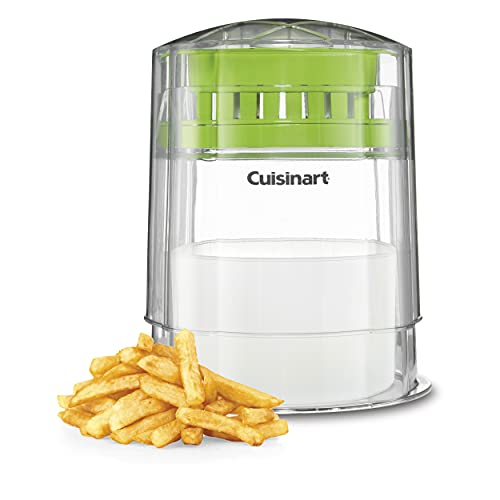
| Only make fries a few times a year | Cuisinart PrepExpress French Fry Cutter | Compact, easy to store between uses |
Key features that actually matter
Sets your fry thickness before the potato even touches the blades. Tighter grids clog faster with starch, wider grids clear themselves more easily.
A longer handle spreads the push over a wider arc, which matters once you're cutting a firm russet instead of a soft new potato.
Suction bases seal against smooth, dry laminate or stone but lose grip on textured or oiled surfaces. Clamp bases hold regardless of finish.
Stainless steel resists pitting even sitting wet in a sink. Coated carbon steel can chip along the edge and start rusting underneath.
Every grid has a maximum width. Push a potato wider than that opening and you risk snapping a blade or bending the frame.
A grid that pops out for washing clears packed starch in seconds. A fixed grid that stays bolted to the frame takes much longer to scrub.
Suction base vs clamp base: key differences
| Feature | Suction base | Clamp base |
|---|---|---|
| Best surface | Smooth, dry laminate, stone, or glass | Any counter edge, including tile or textured tops |
| Setup time | Press and hold a few seconds to seal | Twist the screw tight, ready almost instantly |
| Stability under a hard push | Can pop loose if the counter is slightly damp | Stays locked as long as the edge fits the jaws |
| Where it struggles | Textured, oiled, or uneven countertops | Overhangs wider than the clamp opening |
Matching the potato to the grid before you push
Before a potato touches the blades, hold it against the grid opening. If it's noticeably wider than the squares, halve it lengthwise first rather than forcing it through, since jamming an oversized potato is what bends grids and snaps blade tips. For lumpy potatoes, line the widest point up with the center of the grid rather than a corner, where the frame offers less support. It also helps to seat the potato with a short, light push first so it sits square, then follow with one steady, full-force drive. Trying to power through in one motion on a potato that isn't seated straight is what usually produces the crooked, half-cut strips people blame on the cutter itself.
Common mistakes to avoid
- Choosing a grid size by price rather than the fry thickness you actually want.
- Mounting a suction-base cutter on a textured or oiled counter. Then blaming it for sliding.
- Forcing an oversized potato through the grid. Instead of halving it first.
- Buying a fixed, non-removable grid. Then fighting caked starch every wash.
- Overlooking handle length. And straining through firm or refrigerator-cold potatoes.
Final checklist
- Confirm the blade grid size matches the fry thickness you want
- Match the base type, suction or clamp, to your actual counter surface
- Pick stainless steel blades if you'll use the cutter more than a few times a year
- Measure your usual potatoes against the grid opening before you buy
- Check that the grid and plunger separate from the frame for washing
- Decide between a countertop lever model and a mounted commercial unit by batch size
- Favor a longer handle if you'll be cutting dense or cold potatoes often
- Plan where the cutter will live in storage so the blade grid stays protected
Frequently asked questions
What blade grid size should I get for classic fries?
Look for a grid opening in the 3/8 inch to 1/2 inch range, since that produces the shoestring-to-classic cut most people expect. Wider grids around 1/2 inch and up suit steak-style fries instead.
Do I need a suction base or a clamp base?
A suction base works fine on a smooth, dry countertop, but a clamp base is the safer bet if your counter is textured, tiled, or often slightly wet.
Is stainless steel worth paying more for?
Yes, if you will use the cutter more than a handful of times a year. Stainless resists rust and pitting far longer than coated carbon steel blades left wet in a sink.
How do I know if a cutter is heavy-duty enough for frequent use?
Check the handle rating, the grid thickness, and whether the base bolts or clamps down rather than relying on suction alone. Those are the parts that wear out first under repeated use.
Can one cutter handle both thin and thick fries?
Only if it comes with interchangeable grids. Most single-grid cutters lock you into one fry thickness, so check for swappable blade inserts if you want both cuts.