How to Choose a Mason Jar Vacuum Sealer
Match the sealer to how you store and the jars you own. An electric rechargeable kit is the everyday choice; a handheld pump suits occasional use; an attachment suits vacuum-sealer owners. Confirm it fits your regular and wide-mouth jars and holds a firm seal. It is for storage, not canning.
A mason jar vacuum sealer pulls the air out of a standard Mason jar so dry food and leftovers keep their freshness longer. The choice comes down to how it creates the vacuum, whether it fits your jars, and how convenient it is to recharge and reuse. This guide breaks down each factor so you can buy with confidence.
Which type do you need?
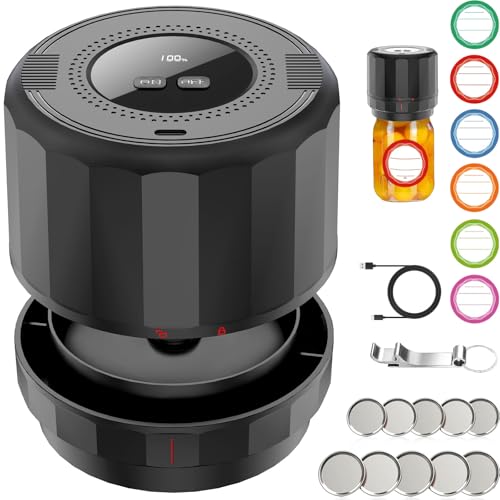
Electric (Rechargeable)
Best for everyday one-button use
- Built-in pump, one button
- Cordless and rechargeable
- Kits fit both mouth sizes
- A battery to keep charged

Handheld / Manual
Best for simple, no-charge sealing
- No battery to charge
- Inexpensive and compact
- Good as a backup
- More effort per jar

Machine Attachment
Best if you own a vacuum sealer
- Uses your existing sealer
- Strong, consistent vacuum
- No extra device to store
- Needs a compatible machine
Find the right mason jar sealer for your needs
| Your need | Best type | What to look for | Start here |
|---|---|---|---|
| Everyday dry-goods storage | Electric | One-button, both mouth sizes | Best for Dry Storage |
| Coffee, spices, flour freshness | Electric | Quick reseal, reusable lids | Best Mason Jar Sealers |
| Occasional or backup use | Handheld | Simple, no charging | Best Mason Jar Sealers |
| Already own a vacuum sealer | Attachment | Compatibility with your machine | Best Mason Jar Sealers |
| Understand storage vs canning | Any | What sealing does and doesn't do | Sealing vs Canning |
Key features that actually matter
Confirm it fits regular and wide-mouth jars; most electric kits include adapters for both.
USB charging and enough seals per charge for a pantry session without a top-up.
A firm, lasting seal that holds the lid down; a weak pump releases within hours.
Works with standard Mason lids you can reuse, rather than proprietary consumables.
One-button operation and a clear seal indicator make daily use painless.
Check it works with the Ball or Mason jars you already own before buying.
A good seal should hold for days; test a jar and check the lid stays down.
Solid build and a stated warranty matter for a small motorised device.
What vacuum sealing jars is good for
Jar sealing shines for dry pantry goods, coffee beans, nuts, flours, herbs and dehydrated foods, where removing air slows staleness, rancidity and oxidation. It also buys extra days for some refrigerated leftovers. What it does not do is preserve low-acid foods for shelf storage: it is not canning, does not heat food, and creates no botulism-safe seal. Keep perishables refrigerated and pressure-can low-acid foods properly.
Common mistakes to avoid
- Treating it as canning. A vacuum-sealed jar of low-acid food left at room temperature is not safe; sealing is for storage, not preservation.
- Ignoring mouth size. Buy a kit that fits the jars you own, or one with both regular and wide adapters.
- Overfilling the jar. Leave headspace so the lid can seat and the pump can pull a vacuum.
- Reusing damaged lids. A dented or warped lid will not hold a vacuum; check the sealing surface.
- Expecting a weak pump to last. Test that the seal holds; a cheap unit that releases in hours is not doing the job.
Final checklist
- Does it fit my regular and wide-mouth jars?
- Is it rechargeable, and how many seals per charge?
- Does the seal hold firmly for days?
- Does it use standard reusable Mason lids?
- Is it one-button and easy for daily use?
- Do I understand it is for storage, not canning?
- What warranty is documented?
Explore mason jar vacuum sealers
Best Mason Jar Sealers
View best picks → ▤Mason Jar Sealer Database
View database → ◉Best for Dry Storage
View guide → ℹSealing vs Canning
Learn more →Frequently asked questions
Which type of mason jar sealer should I choose?
An electric rechargeable kit is easiest for frequent use, with one-button operation and adapters for both jar mouth sizes. A handheld pump needs no charging and suits occasional or backup use. A jar attachment is best if you already own a vacuum sealer. Choose by how often you seal and what you already have.
How do I know it will fit my jars?
Check the listing for regular and wide-mouth support, and confirm it works with the Ball or Mason jars you own. Most electric kits include adapters for both mouth sizes, but it is worth verifying before buying.
How important is a rechargeable battery?
For frequent use it matters a lot, since a charged battery gives the pump enough power for a firm seal and lets you reseal quickly. Look for USB charging and enough seals per charge to get through a pantry session without a top-up.
How do I know the seal is good?
A good seal holds for days and keeps the flat lid pulled down. Press the lid centre after sealing; it should stay down. A seal that releases within hours points to a weak pump, a dirty rim or a damaged lid.
Can I use it instead of canning?
No. Jar sealing removes air for storage and freshness but does not make low-acid foods shelf-stable or destroy botulism spores. Keep perishables refrigerated and pressure-can low-acid foods using tested recipes.
Do these use special lids?
Most work with standard reusable Mason lids, so there are no proprietary consumables. Replace any dented or warped lid, since a damaged sealing surface will not hold a vacuum.
Is a mason jar sealer worth buying?
If you store dry goods like coffee, nuts and flours in jars, yes: removing air keeps them fresher for longer at low cost. Judge value on seal strength and jar fit, and keep expectations to storage rather than preservation.