Best Meat Slicers
A good meat slicer turns deli counters and holiday roasts into a home job, but the specifications that matter are easy to misjudge. Blade diameter, motor power, blade type, whether the blade is removable and sharpenable, thickness control, safety features, build quality and cleaning all shape how a slicer performs and how long it lasts. This guide compares real, currently listed slicers on those factors and recommends models for everyday home deli use, larger cuts and heavier roast slicing. Our assessment is based on verified specifications, manufacturer documentation, current listings and recurring product-class reasoning rather than a claim that every unit was bench-tested.
We evaluate meat slicers using verified specifications, manufacturer documentation, current product listings, replacement-part availability, feature comparisons and product-class analysis. Where reliable hands-on evidence exists we incorporate it separately and label it clearly. We never publish fake ratings, fake test hours or unverified specifications.
For home deli meat and cheese a 7.5-inch OSTBA is the easy pick; the 8.7-inch CUSIMAX adds reach and power; a 10-inch BESWOOD suits large roasts and heavier use. Match blade size and motor to the cuts you actually slice.
Top picks
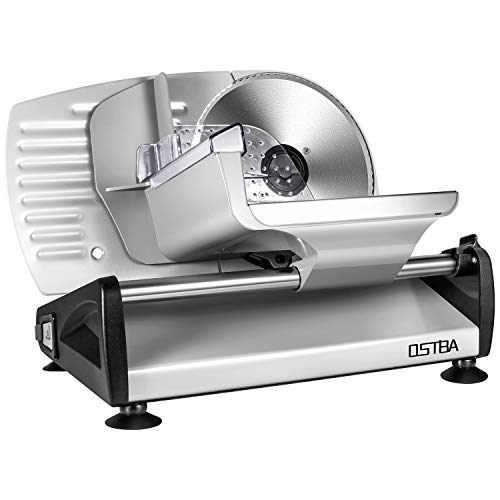
OSTBA 7.5" Electric Meat Slicer
Everyday deli meat & cheese
A compact 7.5-inch stainless slicer with a removable blade and adjustable thickness. The low-fuss choice for home deli meat, cheese and small roasts.
Check price on Amazon Read review
CUSIMAX 8.7" Deli Meat Slicer
Bigger cuts & regular use
A larger 8.7-inch blade and stronger 200W motor give more reach and power for firmer or larger items, while staying home-sized and easy to clean.
Check price on Amazon Read review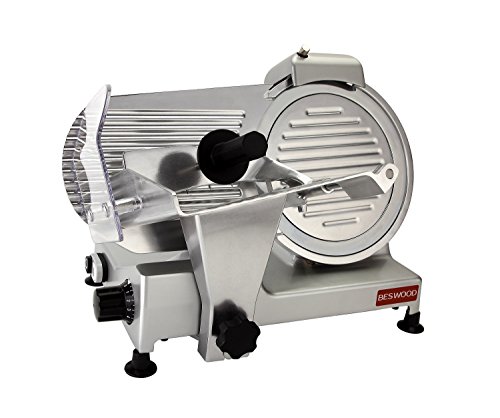
BESWOOD 10" Deli Meat Slicer
Large roasts & heavier use
A 10-inch chromium-plated blade and heavier build clear full roasts in one pass, for buyers who slice large cuts or in volume and do not mind the size.
Check price on Amazon Read reviewHow they compare
| Model | Best For | Blade | Motor | Construction | Removable blade | Weight | |
|---|---|---|---|---|---|---|---|
| OSTBA | Home deli & cheese | 7.5 in | 150W | Stainless steel | Yes | 8.6 lb | View on Amazon |
| CUSIMAX | Larger cuts | 8.7 in | 200W | Stainless steel | Yes | 10.8 lb | View on Amazon |
| Borlebbi | Home use | 7.5 in | 200W | Stainless steel | Yes | — | View on Amazon |
| BESWOOD | Large roasts | 10 in | 240W | Chromium-plated blade | — | 33.0 lb | View on Amazon |
| VEVOR Commercial | Heavy / volume | 10 in | 240W | Stainless steel | Yes | 34.0 lb | View on Amazon |
Model identity, specifications and links verified from live listings and manufacturer sources. A dash (—) means the figure is not stated; confirm the current price on Amazon.
In-depth reviews
OSTBA 7.5" Electric Meat Slicer
Best for: Everyday home deli meat and cheese
A compact, easy-to-live-with home slicer. Its 7.5-inch stainless blade, removable parts and adjustable thickness cover deli meat, cheese and small roasts without commercial bulk.
Check price on AmazonWhy it made our list
It is the right amount of slicer for most homes. The 7.5-inch blade and removable, cleanable parts make regular deli-style slicing simple, and at 150W it handles the cuts a home cook actually slices. It earns the everyday spot on ease of use and cleanup rather than raw power.
Key specifications
- Compact and light for easy storage
- Removable blade and parts for simple cleaning
- Adjustable thickness for deli-style slices
- Stainless food-contact surfaces
- 150W motor is modest for large or firm cuts
- 7.5-inch blade limits big roasts
- Home-grade duty cycle, not for long sessions
- Fewer safety extras than commercial units
How it compares
Against the CUSIMAX, the OSTBA is the lighter, simpler choice: smaller blade, lower power and easier to store, which suits everyday deli meat and cheese. The CUSIMAX pulls ahead when you slice larger or firmer cuts, where its 8.7-inch blade and 200W motor have more reach and drive. Choose the OSTBA if your slicing is routine and storage matters; step up to the CUSIMAX if you regularly tackle bigger items.
What to watch for before buying
For a compact home slicer, the things to weigh are its modest motor and blade size against your typical cut, plus how easily it cleans. Its convenience and small footprint are the reasons to choose it over a larger unit, rather than any performance edge we can independently verify.
You slice deli meat and cheese at home, value easy cleanup and compact storage, and do not need to cut large roasts.
You regularly slice big roasts or firm cuts; a larger blade and stronger motor will serve you better.
CUSIMAX 8.7" Deli Meat Slicer
Best for: Larger cuts and regular use
A step up in blade and power without going commercial. The 8.7-inch blade and 200W motor add reach and drive for larger or firmer cuts while staying a home appliance.
Check price on AmazonWhy it made our list
It sits in the sweet spot between a basic home slicer and a heavy commercial machine. The larger blade clears bigger items in one pass and the stronger motor holds speed on firmer cuts, yet it still disassembles for cleaning and fits a home counter. For cooks who slice regularly or want more headroom, that balance is the draw.
Key specifications
- Larger 8.7-inch blade for bigger cuts
- 200W motor holds speed on firmer meat
- Removable parts for cleaning
- Wide thickness range
- Heavier and larger than a 7.5-inch unit
- Still home-grade, not for all-day commercial use
- More counter space required
- Overkill for occasional light slicing
How it compares
Against the OSTBA, the CUSIMAX trades compactness for capability: a bigger blade and stronger motor that handle larger and firmer cuts more comfortably, at the cost of size and weight. Against the 10-inch BESWOOD, it is the more manageable home choice, lighter, easier to store and cheaper, while the BESWOOD wins only when you need to clear full roasts or slice in volume. The CUSIMAX is the balanced middle option.
What to watch for before buying
As a mid-size home slicer, the trade-offs to weigh are its larger footprint and weight against the extra blade reach and power it buys. It makes most sense if you regularly slice bigger or firmer cuts rather than the occasional sandwich.
You slice regularly, want more blade and power than an entry unit, and still want something that cleans and stores like a home appliance.
You only slice the occasional deli portion; a compact 7.5-inch unit is cheaper and easier to store.
BESWOOD 10" Deli Meat Slicer
Best for: Large roasts and heavier use
A 10-inch, heavier slicer for buyers who cut large roasts or slice in volume. Its chromium-plated blade and bigger build clear full cuts that overwhelm home units.
Check price on AmazonWhy it made our list
When the job is whole roasts or steady volume, blade size and build become the limiting factors, and this is where the BESWOOD earns its place. The 10-inch blade clears large cuts in a pass and the heavier construction is made for more sustained use than a light home slicer. You pay for that in weight, footprint and price.
Key specifications
- 10-inch blade clears large roasts in one pass
- Heavier build for more sustained use
- Corrosion-resistant chromium-plated blade
- 240W motor for firmer, larger cuts
- Large and heavy; needs dedicated space
- Higher price than home slicers
- Overkill for deli meat and cheese
- Blade-removal and cleaning details vary; confirm before buying
How it compares
Against the CUSIMAX and OSTBA, the BESWOOD is the specialist: it wins decisively on large roasts and volume thanks to its 10-inch blade and heavier build, but loses on everyday practicality, being far bigger, heavier and pricier than either home unit. If most of your slicing is deli meat and cheese, the smaller units are the smarter buy; the BESWOOD is for buyers whose cuts genuinely need a commercial-size blade.
What to watch for before buying
As a commercial-size slicer, the trade-offs to weigh are its weight, footprint and price against the large-cut capacity it provides. It only makes sense if you routinely slice big roasts or in volume; for home portions it is more machine than needed.
You slice large roasts or whole muscles, or slice in volume, and have the space and budget for a commercial-size machine.
Your slicing is mostly deli meat and cheese; a 7.5 to 8.7 inch home slicer is cheaper, lighter and easier to store and clean.
How we evaluate meat slicers
Consistency and cleanness across meat and cheese, and whether the dial holds its setting.
Blade size, type, corrosion resistance and whether it is removable and serviceable.
Materials, blade guard, food pusher, non-slip base and safety switch.
Controls, carriage feel, thickness range and stability in use.
Removable parts, awkward crevices and food-contact materials.
Blade size, motor, build and safety against price position.
How to choose
A 7 to 7.5 inch smooth-blade slicer covers deli meat and cheese.
Step up to an 8 to 10 inch blade with a stronger motor.
Smooth for meat and cheese; serrated for bread and crusty items.
Look for a guard, food pusher, non-slip base and safety switch.
Prioritise a removable blade and carriage that come apart without tools.
A meat slicer is a simple machine judged on a few things: the blade, the motor behind it, how safely and easily it runs, and how painful it is to clean. Match those to what you actually slice and the choice gets easy.
Blade diameter
Blade size sets what you can slice in one pass. A 7 to 7.5 inch blade is the common home size, ideal for deli meat, cheese and small roasts. An 8 to 8.7 inch blade adds a little reach for larger items. A 10 inch blade and up clears full roasts and whole muscles and is what most semi-commercial and commercial units use. Bigger blades handle more but cost more, weigh far more, and take real counter and storage space, so only size up if you regularly slice large cuts.
Motor power
Wattage decides whether the blade keeps speed through dense or semi-frozen meat. Home slicers commonly sit in the 150 to 240W range, which is fine for deli meat and cheese. A stronger motor matters most when you slice firmer or larger cuts, where an underpowered blade bogs and produces ragged slices.
Blade type: smooth vs serrated
A smooth blade gives the cleanest slices on meat and cheese and is the right default for a general home slicer. A serrated blade handles bread and crusty items but tears soft meat. Some blades are interchangeable; if you want both jobs, check whether spare blade types are available for your model.
Removable and sharpenable blade
A blade that removes for cleaning and can be sharpened, whether by a built-in sharpener or by hand, extends the machine's useful life and makes cleanup far safer. A fixed or non-serviceable blade turns a slicer into a disposable once it dulls, so this is worth prioritising.
Thickness control
An adjustable dial from near-transparent to roughly three-quarters of an inch covers everything from prosciutto to steak. What matters most is that the gauge plate holds its setting, so every slice matches; a dial that drifts is more frustrating than a limited range.
Safety features
A spinning blade deserves respect. Look for a blade guard, a food pusher that keeps your hand clear, a non-slip base and, ideally, a safety switch so it cannot start unexpectedly. These are not luxuries on a slicer; they are the difference between a routine task and an injury.
Build quality
Stainless food-contact parts resist corrosion and are easier to keep clean; metal housings and gears outlast plastic under regular use. If you slice weekly or in any volume, a heavier, more metal-built machine will hold up far better than a light plastic one, even if they look similar in photos.
Cleaning
Cleaning is the reason most slicers end up in a cupboard. A slicer whose blade, carriage and tray come off without tools is one you will actually keep using. Fatty residue and safety both demand thorough cleaning after each session, so simple disassembly is a genuine buying factor, not an afterthought.
Duty cycle and noise
Home slicers have a duty cycle, a limit on continuous run time before the motor needs to rest. For a few sandwiches it is irrelevant; for slicing a large batch it matters. Noise is worth a thought too if the slicer runs for long stretches in a shared kitchen.
Budget tiers
Entry-level home slicers cover deli meat and cheese at a low price, usually with a 7 to 7.5 inch blade and more plastic. Mid-range units add a larger blade, stronger motor and more metal, suiting regular slicing. Commercial-grade slicers bring big blades, heavier build, built-in sharpeners and long duty cycles for large roasts and volume, at a much higher price and weight. Moving up mostly buys durability, blade size and run time, so match the tier to how often and how large you slice.
The short version. Decide your typical cut first. Deli meat and cheese at home: a 7 to 7.5 inch smooth-blade slicer with removable parts. Larger roasts or frequent use: an 8 to 10 inch unit with a stronger motor and more metal. Prioritise a removable, sharpenable blade and real safety features over raw blade size.
Which one is right for you?
- You slice deli meat and cheese
- You want compact storage
- Budget is the priority
- You slice occasionally
- You slice bigger or firmer cuts
- You slice regularly
- You want more blade and motor headroom
- You still want home-friendly cleaning
- You slice large roasts or whole muscles
- You slice in volume
- You have dedicated space
- Long duty cycle matters
Frequently asked questions
What size meat slicer blade is best for home use?
A 7 to 7.5 inch blade suits most homes, handling deli meat, cheese and small roasts while staying compact and affordable. Step up to an 8 to 10 inch blade only if you regularly slice large roasts or whole muscles, since bigger blades cost more, weigh far more and take much more storage space.
Smooth or serrated blade for a meat slicer?
A smooth blade gives the cleanest slices on meat and cheese and is the right default for a general home slicer. Serrated blades handle bread and crusty items but tend to tear soft meat. If you need both, check whether your model offers interchangeable blades before buying.
Can a meat slicer cut frozen meat?
It should not cut fully frozen meat, which strains the motor and can damage the blade. Slightly firming meat in the freezer for 20 to 30 minutes, so it is partly frozen but still yields, gives the thinnest, cleanest slices, especially for bacon and deli meat.
How thin can a meat slicer cut?
Most home slicers adjust from near-transparent, deli-style thinness up to roughly three-quarters of an inch. The exact range varies by model. What matters most is that the thickness dial holds its setting so every slice comes out the same.
Can you slice bread and cheese with a meat slicer?
Cheese slices well on a smooth blade, though very soft cheese can smear, so chilling helps. Bread is better suited to a serrated blade; a smooth meat-slicing blade will crush or tear soft loaves. Check your model for the appropriate blade.
How do you clean a meat slicer safely?
Unplug it first, then remove the blade, carriage and tray if they detach, keeping the blade guard in place. Wash parts by hand, dry them fully to prevent rust, and take care around the edge. A slicer that disassembles without tools is far easier and safer to keep clean.
Are electric meat slicers safe to use at home?
They are, with respect for the blade. Use the food pusher, keep the blade guard fitted, work on a non-slip base and unplug before cleaning. The main risks come from bypassing the pusher or cleaning around a running or plugged-in blade.
Is a home meat slicer worth it?
If you regularly buy deli meat or cheese, slicing your own is usually cheaper per pound and lets you control thickness and freshness. For occasional use, the storage space and cleaning effort may outweigh the savings, so match the purchase to how often you will actually use it.