Best Pressure Canner for Beginners
A first pressure canner should make it easy to follow tested recipes: a clear manual, a manageable size, and a gauge you are comfortable maintaining. A straightforward stovetop Presto is a common starting point; an electric canner suits those who want hands-off operation within tested programs.
Top picks

Presto 16-Quart Pressure Canner
First-time canners
A manageable 16-quart aluminum stovetop canner with a clear manual and widely available parts, a common first canner.
Check price on Amazon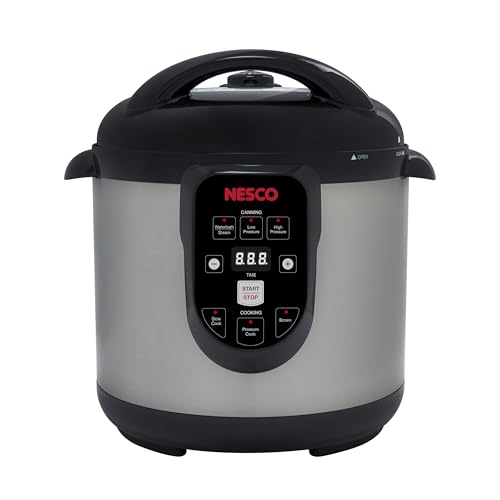
NESCO NPC-9 Electric Pressure Canner
Hands-off convenience
An electric canner that frees the stovetop and runs programmed cycles; use only with the maker's tested canning programs.
Check price on AmazonA first pressure canner should make it easy to follow tested recipes correctly: a clear manual, a size that suits your batches, and a gauge system you are comfortable maintaining. Precision matters less than consistently doing the process right, so beginners are usually best served by a straightforward stovetop canner with good documentation and available parts.
What matters for a first canner
A manual with tested processes, or one that points to USDA guidance, keeps you on safe ground.
Big enough for a useful batch, but not so large it is hard to handle when full.
A weighted regulator needs no testing; a dial gauge is precise but must be checked yearly.
Easy-to-find gaskets and gauges mean the canner lasts through many seasons.
How to start safely
Whatever canner you choose, begin with a tested recipe for your food, jar size and altitude from the USDA or the National Center for Home Food Preservation. Do a practice run with water to learn venting and pressure control before your first real batch, and have any dial gauge tested at a local extension office. Pressure-can low-acid foods only in a true pressure canner, never a water-bath pot or an ordinary pressure cooker.
Compare full specifications in our best pressure canners guide, or weigh the systems in electric vs stovetop.
How the picks compare
The two suit different first-timers. The Presto 16-quart is a manageable aluminium stovetop canner with a clear manual, a friendly size to learn on. The NESCO NPC-9 is electric and runs programmed cycles, freeing the stovetop. Read the safety note before choosing the electric route.
Starting pressure canning safely
Pressure canning is a food-safety skill, so start on solid ground. A manageable stovetop canner with a gauge and a clear manual is the easiest reliable way to learn, letting you follow tested recipes exactly. If you choose an electric canner, use only a unit stated to be validated for pressure canning and follow its process precisely.
Begin with a tested recipe, vent the canner fully before pressurising, and adjust pressure for altitude. Lean on the National Center for Home Food Preservation for guidance.
Related guides
Best Pressure Canners
Buying GuideHow to Choose a Pressure Canner
InformationalHow Does a Pressure Canner Work?
InformationalPressure Canner Problems & Fixes
Frequently asked questions
What size pressure canner should a beginner buy?
Big enough for a useful batch but easy to handle when full. Many beginners start with a 16 to 23-quart stovetop canner, which covers pints and quarts while remaining manageable. Match the size to how much you expect to preserve at once.
What is a good first pressure canner?
A manageable stovetop canner, around 16 quarts, with a gauge and a clear manual. It lets you follow tested recipes exactly while you learn the process.
Are electric pressure canners good for beginners?
Only if the model is stated to be validated for pressure canning and you follow its process exactly. Many multicookers are not safe for canning low-acid foods.