How to Choose a Pressure Canner
Match the canner to your batches and comfort with maintenance. A dial-gauge stovetop canner gives precise, altitude-adjustable pressure but needs annual testing; a weighted-gauge canner is low-maintenance; an electric canner is hands-off within tested programs. Only a true pressure canner safely processes low-acid foods, using tested USDA recipes.
A pressure canner is judged on the gauge system it uses, how many jars it holds, whether it suits your stovetop or runs on its own element, and the safety features that let it reach and hold canning pressure. Match those to what you preserve and the choice gets simple. This guide breaks down each factor so you can buy with confidence.
Which type do you need?

Dial-Gauge Stovetop
Best for precise pressure control
- Shows exact pressure
- Adjusts for altitude precisely
- Large batch capacity
- Gauge needs annual testing

Weighted-Gauge Stovetop
Best for low-maintenance canning
- Self-regulating weight
- No annual gauge testing
- Audible jiggle confirms pressure
- Set pressures (5 / 10 / 15 psi)
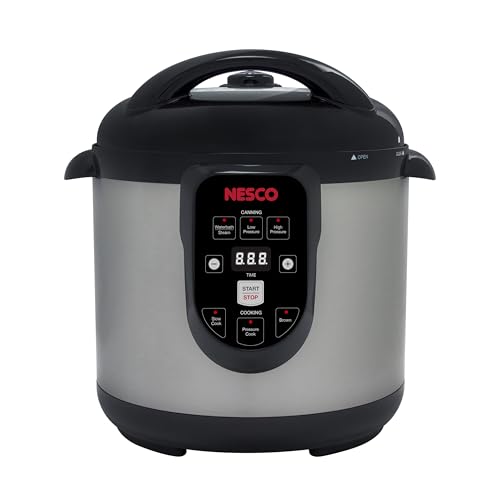
Electric
Best for hands-off convenience
- Runs on its own element
- Programmable, countertop
- Frees the stovetop
- Use only maker-tested recipes
Find the right pressure canner for your needs
| Your need | Best type | What to look for | Start here |
|---|---|---|---|
| New to pressure canning | Dial or weighted | Clear manual, tested recipes, right size | Best for Beginners |
| Large harvest batches | 23-qt stovetop | Holds a full load of quart jars | Best Pressure Canners |
| Precise altitude control | Dial-gauge | Readable dial; plan annual testing | Best Pressure Canners |
| Low maintenance | Weighted-gauge | Self-regulating weight, no testing | Best Pressure Canners |
| Hands-off / no stovetop space | Electric | Maker-tested canning programs | Electric vs Stovetop |
Key features that actually matter
Dial gauges show exact pressure but need annual testing; weighted gauges self-regulate at set pressures.
Measured in quarts and in jars per load; a 23-qt canner takes a full batch of quart jars.
Aluminum heats fast and is lighter; stainless is heavier and works on more cooktops.
Check induction compatibility and that your burner suits the canner's base size and weight.
An overpressure release, a locking lid and a vent/petcock are essential, not optional.
Canning pressure rises with altitude; your canner and recipe must let you set it correctly.
Electric frees the stove but must be used only with the maker's tested canning programs.
Confirm replacement gaskets, gauges and seals are available so the canner lasts.
Dial-gauge vs weighted-gauge
| Feature | Dial-gauge | Weighted-gauge |
|---|---|---|
| Reads pressure | Exact number on a dial | Set pressures (5 / 10 / 15 psi) |
| Altitude control | Fine, to the exact psi | By choosing the weight setting |
| Maintenance | Gauge needs annual testing | No gauge testing needed |
| Confirmation | Watch the dial | Listen for the regulator jiggle |
| Best for | Precise, high-altitude canning | Simple, low-maintenance canning |
Many stovetop canners include a dial gauge and a weighted regulator together. Whichever you use, have a dial gauge checked each season, usually through a local extension office, since an inaccurate gauge is a genuine safety risk with low-acid foods.
Safety essentials you should not skip
- Use tested recipes only. Follow USDA or National Center for Home Food Preservation processes for the food, jar size and your altitude.
- Pressure-can low-acid foods. Vegetables, meats and beans must be pressure-canned, never water-bath canned.
- Do not substitute a pressure cooker. Ordinary pressure cookers and multicookers are not endorsed for pressure canning.
- Check your gauge and seals. Test a dial gauge each season and replace worn gaskets and overpressure plugs.
- Vent properly. Exhaust air before timing, and let pressure fall naturally; never force-cool a canner.
Final checklist
- How much do I preserve at a time, and what jar size?
- Dial-gauge for precision, or weighted for low maintenance?
- Does it fit my cooktop, including induction if needed?
- Am I willing to have a dial gauge tested annually?
- Are replacement gaskets and parts available?
- Do I have tested recipes for what I want to can?
- If electric, does the maker publish tested canning programs?
- What warranty is documented?
- National Center for Home Food Preservation (NCHFP) — tested home-preservation methods and the USDA Complete Guide to Home Canning
- USDA Food Safety and Inspection Service (FSIS)
- U.S. Food & Drug Administration (FDA) — Food
- FoodSafety.gov
Explore pressure canners
Best Pressure Canners
View best picks → ▤Pressure Canner Database
View database → ◉Best for Beginners
View guide → ⇄Electric vs Stovetop
Compare now →Frequently asked questions
Which gauge system should I choose?
A dial gauge shows exact pressure and adjusts precisely for altitude, which suits high-altitude and precise canning, but it must be tested each season. A weighted gauge self-regulates at set pressures with no testing, which suits low-maintenance canning. Many stovetop canners include both, so you can use whichever fits the recipe.
What capacity do I need?
Match capacity to how much you preserve at once. A 16-quart canner suits smaller batches and is easier to handle; a 23-quart takes a full load of quart jars for volume canning. Remember the canner must fit and stay stable on your burner when full, and larger canners are heavy when loaded.
Aluminum or stainless steel?
Aluminum heats quickly and is lighter, which suits large canners; stainless is heavier but works on more cooktops, including many induction ranges. If you have an induction cooktop, confirm compatibility before buying, since not every aluminum canner will work on it.
Can I use a pressure cooker or multicooker for canning?
No. Ordinary pressure cookers and electric multicookers such as the Instant Pot are not endorsed for pressure canning low-acid foods, even with a "canning" setting, unless the manufacturer publishes validated processes. Use a true pressure canner and tested USDA recipes.
How do I keep a pressure canner safe?
Use tested recipes for your food, jar size and altitude; have a dial gauge tested each season; replace worn gaskets and overpressure plugs; vent fully before timing; and let pressure fall naturally. A pressure canner is a safety device, so keep its seals and gauge in good order.
Is an electric pressure canner worth it?
It is if you value hands-off operation and a free stovetop and will stay within the maker's tested programs. It gives up the capacity and full recipe range of a stovetop canner, so it suits convenience-focused canners rather than high-volume preservers.
How often do dial gauges need testing?
Each canning season, usually through a local cooperative extension office. An inaccurate gauge can under-process low-acid food, which is a genuine safety risk, so testing is not optional if you rely on a dial gauge.